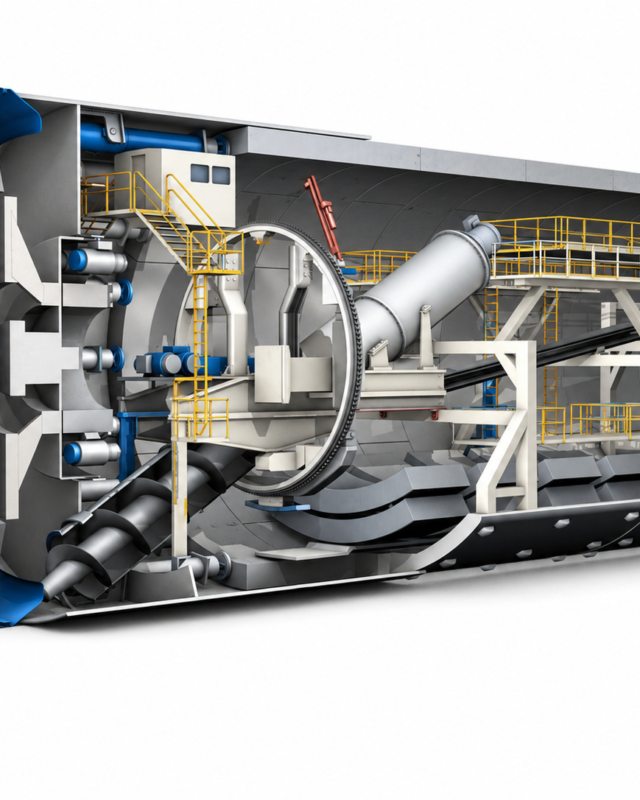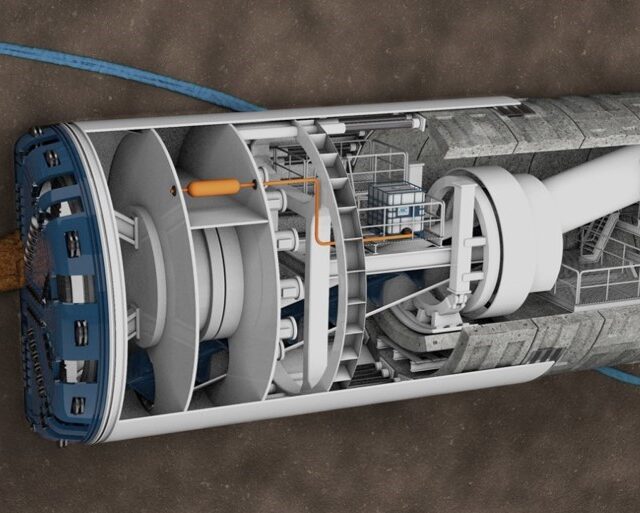
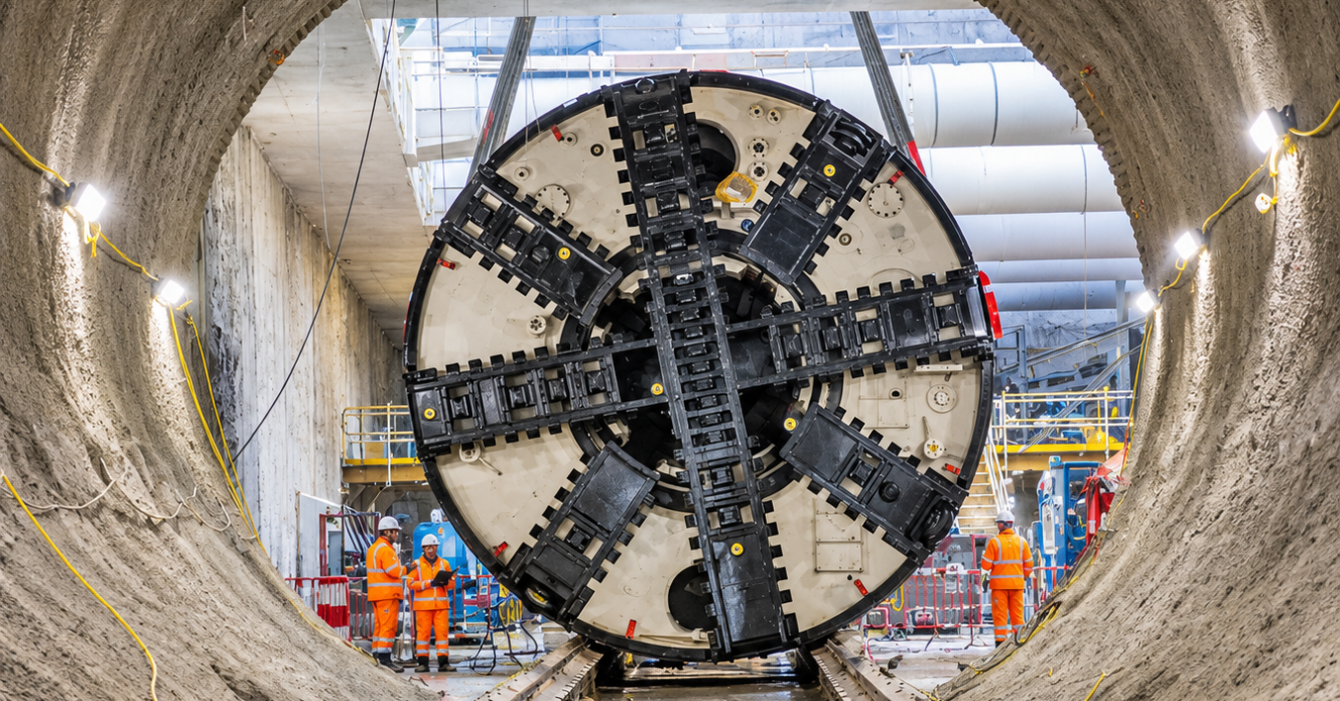
The shield tail is a critical area of a Tunnel Boring Machine (TBM), where effective sealing must be maintained to prevent groundwater, soil particles, and annulus grouting materials from entering the machine. To meet this requirement, TBM tail seal grease is used in combination with a specialised tail seal brush system, forming a protective barrier at the interface between the steel shield tail and the precast segmental tunnel lining.
How does tail seal grease work? What factors determine sealing performance, and which material solutions can help maintain continuous and stable tunnelling operations? Explore the key technical considerations in this article.
What is TBM tail seal grease?
TBM tail seal grease (tail sealant) is a specialised sealing material used in the tail sealing system of a Shield Tunnel Boring Machine (Shield TBM), particularly in machines that install precast concrete segmental linings.
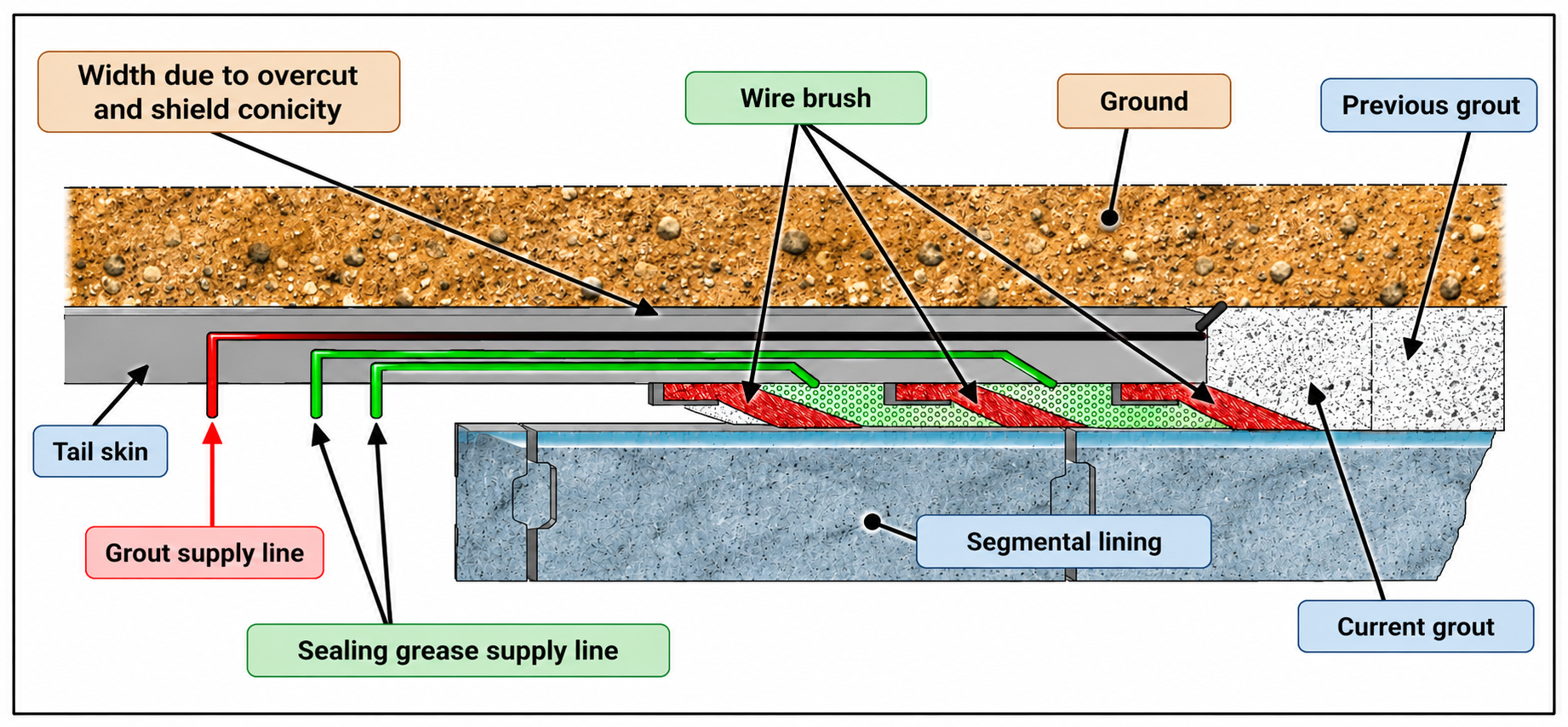
During tunnelling operations, precast concrete lining segments are assembled into rings within the shield tail. A clearance exists between the outer surface of the segmental lining and the steel shield tail. This gap must be effectively sealed to prevent groundwater, fine soil particles, and grout from entering the working area inside the machine.
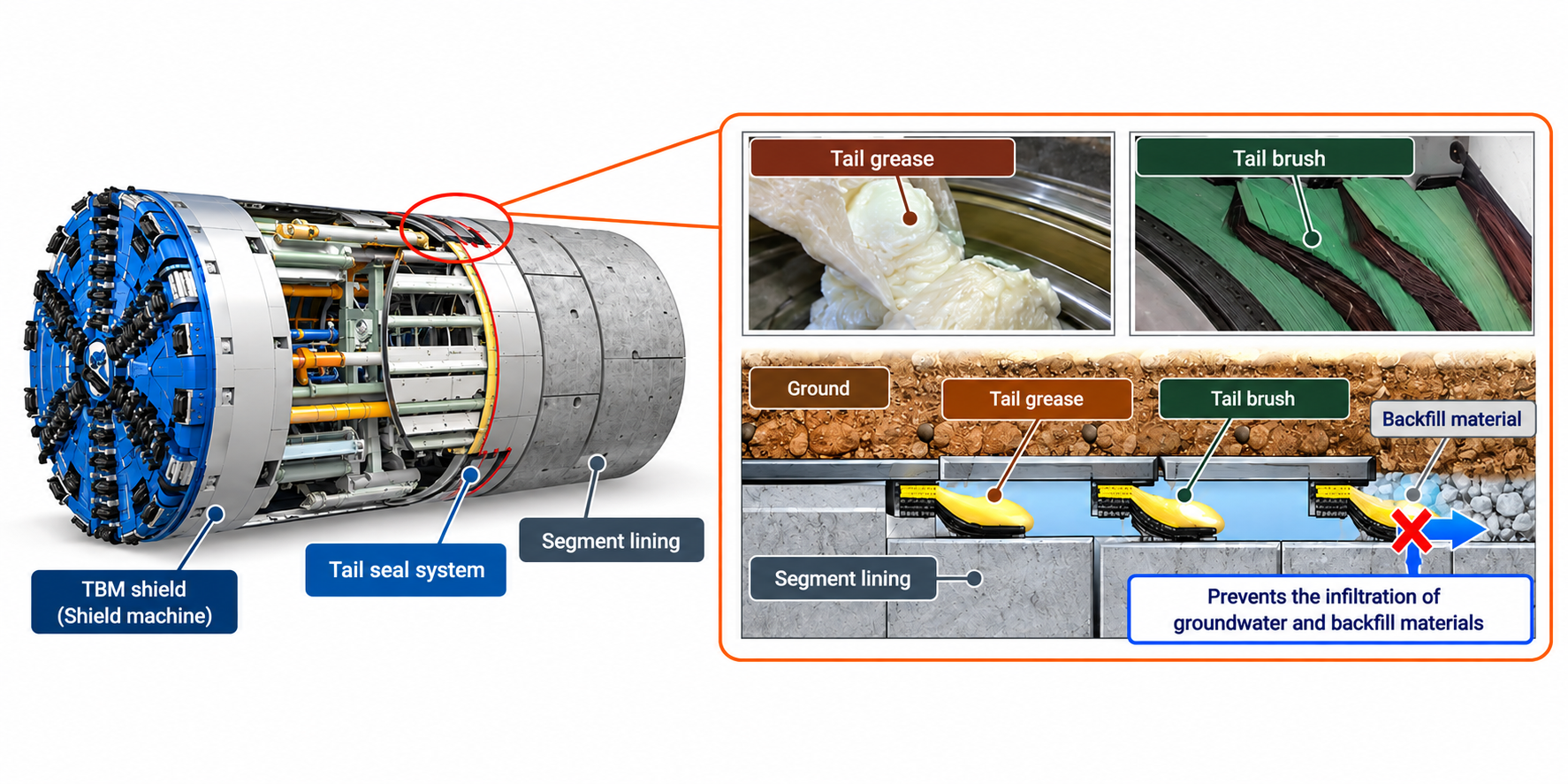
Tail seal grease is injected into the chambers between the rows of tail seal brushes, helping to form a watertight barrier and maintain protection as the TBM advances.
Unlike conventional lubricating greases, TBM tail sealing materials are primarily selected based on their sealing performance under pressure, water resistance, adhesion, and compatibility with the grease injection system. They are essential components of the shield tail sealing system, contributing to equipment protection and stable tunnelling conditions.
How does the TBM shield tail sealing system work?
The shield tail sealing system is designed to establish a protective barrier at the interface between the steel shield tail and the outer surface of the precast concrete segmental lining. Its sealing mechanism relies on the coordinated operation of tail seal brushes, specialised tail seal grease, and the grease injection system.
1. Tail seal brush system
At the shield tail, rows of metallic wire brushes are arranged around the circumference of the machine, maintaining contact with the outer surface of the segmental lining rings as they pass through the shield tail.
Depending on the TBM design, the system may incorporate multiple rows of brushes, forming chambers that retain the sealing material. These brushes accommodate relative movement between the shield tail and the tunnel lining within the design limits, while helping to keep the sealing material in the areas requiring protection.
2. Sealing mechanism using specialised tail seal grease
TBM tail seal grease is injected into the chambers between the brush rows, filling voids and helping establish a barrier against the ingress of groundwater, fine soil particles, and annulus grout. As the TBM advances, the brush system remains in contact with the outer surface of the segmental lining, while additional sealing material is supplied according to operational requirements.
To maintain effective sealing, the grease must provide suitable adhesion and stability while withstanding the pressure conditions acting on the system. Sealing performance depends not only on the material itself but also on the condition of the tail seal brushes, the configuration of the grease chambers, and the actual grease injection conditions.
3. Role of the grease injection system
The grease delivery system is responsible for delivering material to the sealing chambers via piping and delivery points arranged according to the TBM design. Flow rate, pressure, and grease delivery mode must be appropriately controlled to maintain the necessary amount of material in the sealing chambers.
When the grease delivery system operates erratically or the material is not properly distributed, the ability to maintain the protective barrier may be compromised. Therefore, sealing the TBM shield tail is a coordinated process involving mechanical design, specialized materials, and operational control.
The role of TBM tail seal grease in controlling water and material ingress
In shield tunnelling, the shield tail is an area where the TBM equipment, tunnel lining, and surrounding ground interact. Particularly under high groundwater conditions or during annulus grouting operations, the sealing system is exposed to the combined effects of groundwater pressure, excavated materials, and grout injection pressure.
TBM tail seal grease helps control these effects through several important functions.
1. Preventing groundwater ingress into the TBM
When a TBM operates below the groundwater table, hydrostatic pressure from the surrounding ground can act on the shield tail area. If the sealing system fails to maintain adequate protection, groundwater may enter through the interface between the shield tail and the tunnel lining, affecting working conditions inside the machine. Specialised tail seal grease, working together with the tail seal brush system, helps establish a water-resistant barrier in this area.
The ability to maintain sealing performance under pressure is particularly important for tunnelling projects in water-saturated ground or under high groundwater pressure.
2. Preventing the ingress of fine soil particles and ground materials
In addition to groundwater, fine soil particles and materials from the surrounding ground may enter through inadequately sealed areas. The presence of these materials can cause contamination, interfere with system operation, and increase cleaning, inspection, or maintenance requirements.
The tail seal grease system helps limit the movement of these particles into the machine, contributing to suitable operating conditions.
3. Preventing annulus grout from entering the shield tail
During TBM tunnelling, the annular gap between the precast segmental lining and the surrounding ground must be filled through annulus grouting (backfill grouting). Grout is injected into the void behind the shield tail to support load transfer, stabilise the tunnel lining, and limit ground movement. However, grout injection pressure also creates sealing requirements at the interface between the shield tail and the segmental lining. If the sealing system does not function effectively, grout may penetrate areas inside the shield, affecting construction conditions and equipment operation.
The use of suitable TBM tail seal grease helps maintain a protective barrier against grout ingress while supporting continuous tunnelling and segmental lining installation.
Related article: TBM Annulus Grouting: Role and Solutions in TBM Tunnelling
4. Supporting continuous and safe tunnelling operations
Failures in the shield tail sealing system can result in water or material ingress, requiring inspection, corrective measures, and potentially causing operational interruptions. In urban tunnelling projects or large-scale underground infrastructure developments, such interruptions may affect construction schedules and site operations.
Therefore, maintaining effective shield tail sealing not only helps protect equipment but also supports risk management, appropriate working conditions, and the overall efficiency of mechanised tunnelling operations.
Key technical requirements for TBM tail seal grease
Under actual tunnelling conditions, sealing performance depends on the compatibility between material properties, pressure conditions, and the design of the shield tail sealing system. To meet different operational requirements, TBM tail seal grease should be evaluated against several important technical characteristics.
1. Sealing performance and pressure resistance
The shield tail area may be simultaneously exposed to groundwater pressure and annulus grout injection pressure. Therefore, the sealing material must be capable of maintaining an effective barrier under differential pressure conditions consistent with the system design.
Sealing performance under pressure is a key consideration when assessing material suitability, particularly for tunnelling projects involving complex groundwater conditions.
2. Water resistance and washout resistance
Tail seal grease often operates in environments where direct contact with water and moisture-bearing materials is possible. Good water resistance and resistance to washout help the material remain within the sealing chambers, reducing the risk of deterioration of the protective barrier. These properties should be evaluated in relation to groundwater pressure and actual operating conditions.
3. Adhesion and mechanical stability
As the TBM advances, the sealing material is subjected to relative movement between the tail seal brushes and the outer surface of the segmental lining. The grease must provide suitable adhesion to the relevant surfaces while maintaining its cohesion and working consistency under mechanical stress. If the material lacks adequate mechanical stability, its ability to maintain an effective sealing barrier within the chambers may be compromised.
4. Pumpability and material distribution
For automatic grease injection systems, pumpability is an important selection criterion. The material must have suitable rheological properties to allow delivery through pipelines, pumping equipment, and grease injection points. Grease with excessively high pumping resistance may cause difficulties during injection, while material that is too soft or lacks sufficient cohesion may adversely affect sealing performance. Therefore, material selection should achieve an appropriate balance between pumpability and sealing effectiveness according to the equipment requirements.
In addition to the properties of the grease itself, compatibility with the tail seal brush system, concrete segment surfaces, pumping equipment, and annulus grouting materials should also be considered. In particular, the sealing material should not cause adverse interactions that could affect the performance of related system components.
For applications involving specific environmental or construction safety requirements, the relevant material properties should also be assessed against the standards and regulations applicable to the project.
Related article: Common Technical Challenges in TBM Tunnelling and Effective Control Solutions
Selecting the right TBM tail sealing solution for project conditions
The effectiveness of a shield tail sealing solution depends on various factors, including equipment configuration, geological conditions, grouting technology, and the operational requirements of each project. Therefore, material selection should be based on a careful assessment of the technical specifications and actual construction conditions.
Several important considerations should be addressed from the outset when selecting a suitable solution:
- Identify the sealing system configuration and requirements
The first step is to understand the shield tail design, number of brush rows, grease chamber configuration, and material injection method. This information provides the basis for identifying suitable tail seal grease products for the system.
- Evaluate construction conditions and application requirements
Groundwater conditions, operating pressures, annulus grout characteristics, and TBM advance cycles should be considered during material selection. For projects involving particularly demanding conditions, additional testing or technical verification may be required.
- Review technical documentation and coordinate with specialist solution providers
Product Technical Data Sheets (TDS), equipment documentation, and TBM manufacturer requirements provide essential references for material selection. Collaboration between contractors, TBM operation teams, and specialist solution providers helps clarify application conditions, determine appropriate material usage, and plan material supply in line with the construction schedule.
Conclusion: Selecting the right tail sealing solution involves more than identifying a product that meets technical specifications. It also requires ensuring compatibility between the sealing material, equipment system, and actual project operating conditions.
MC Underground – Innovative German Technology for TBM tail sealing solutions
With over 60 years of experience from the German MC-Bauchemie Group in the field of construction chemicals, MC Underground (MCU) combines research capabilities, technological innovation, and international expertise to develop advanced material solutions for the tunneling and mining industries.
In mechanised TBM tunnelling, MCU continuously focuses on optimising material performance through specialised chemical technologies, addressing the increasingly demanding technical requirements of modern tunnelling equipment and construction conditions.
Specialised material technology for TBM shield tail sealing systems
For shield tail sealing applications, MCU offers the specialised MC-Montan Seal product range, developed to meet sealing requirements at the interface between the shield tail and the precast segmental lining.
Some typical products includes:
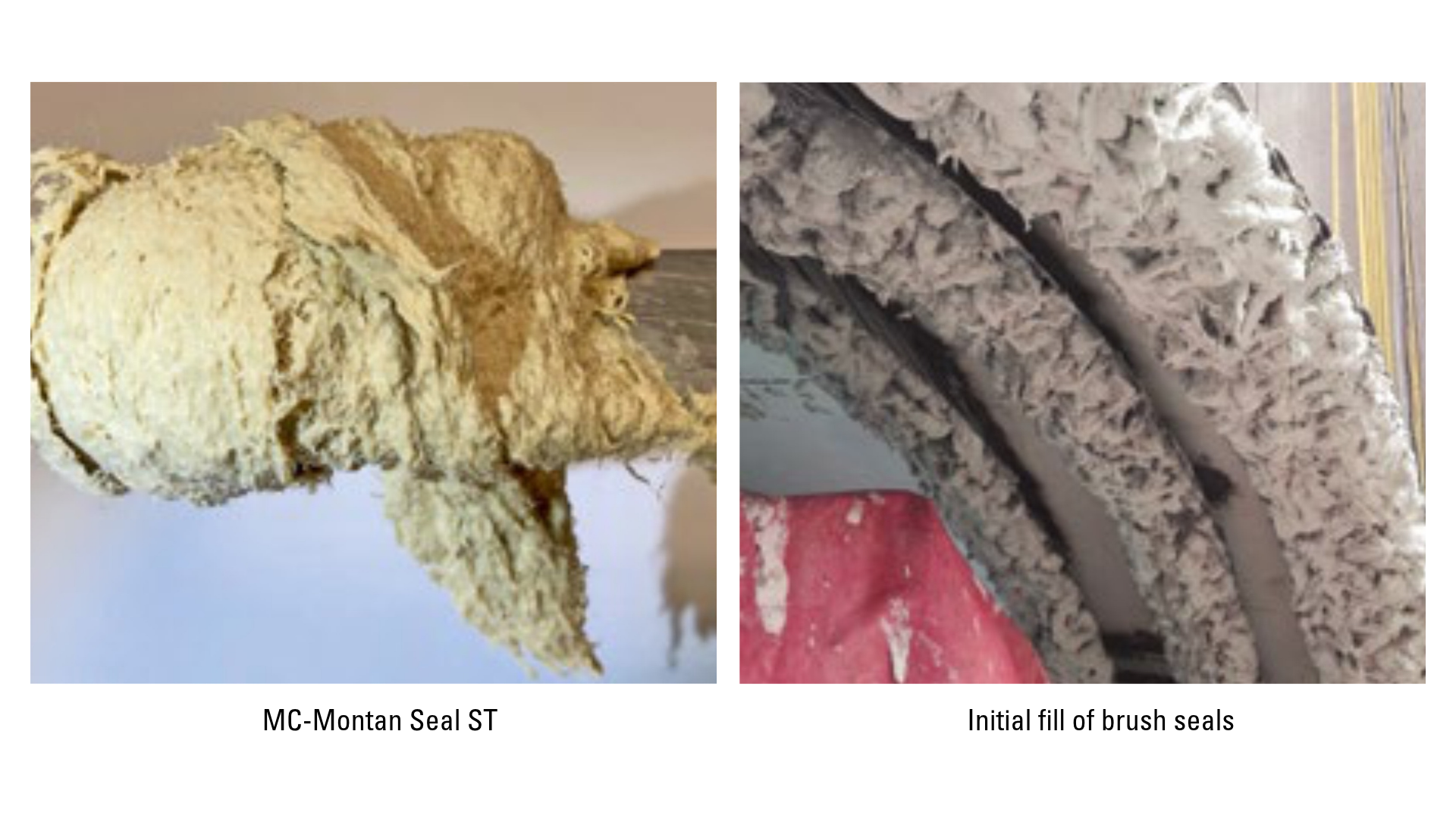
- MC-Montan Seal ST 01: A specialised TBM tail sealant designed for sealing applications within the tail seal brush system, subject to the relevant technical requirements.
- MC-Montan Seal ST 11: A tail sealing material solution for TBM applications, suitable for the specifications and operating conditions defined in the product’s Technical Data Sheet.
- MC-Montan Seal ST F1: A specialised tail sealant for the initial filling (First Fill) of the tail seal brush system, according to the machine design and commissioning procedures.
Technological innovation combined with environmentally responsible solutions
Beyond technical performance, material innovation with a focus on sustainable development is also one of MC Underground’s key priorities.
Through its Eco-Responsibility approach, MCU places emphasis on developing plant-based chemical solutions, including soil conditioning foams, lubricating greases, and TBM tail sealants. This approach combines material research, technical application requirements, and environmental responsibility, helping to expand the range of technological options available for modern tunnelling projects.
Advanced technology backed by International Expertise
The value of MC Underground extends beyond its portfolio of specialised materials to its ability to connect advanced chemical technologies, practical application experience, and an international network of experts.
By evaluating equipment characteristics and project-specific requirements, MCU aims to deliver solutions suited to actual construction conditions, helping improve sealing performance, protect TBM systems, and maintain operational continuity.
Explore MC Underground’s Comprehensive TBM Chemical and Technology Solutions
TALK TO OUR EXPERTS