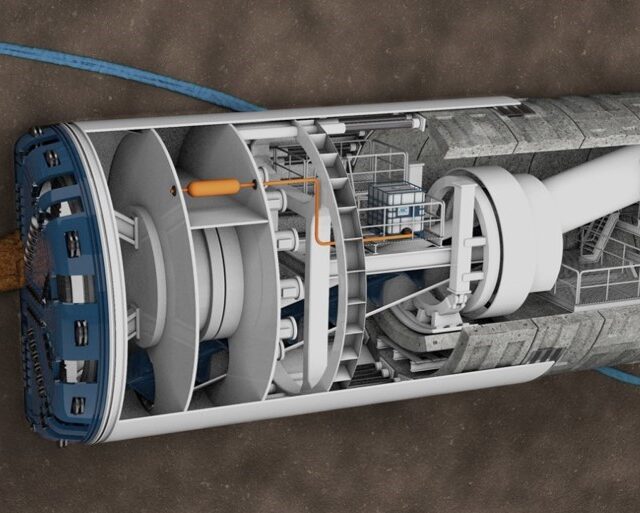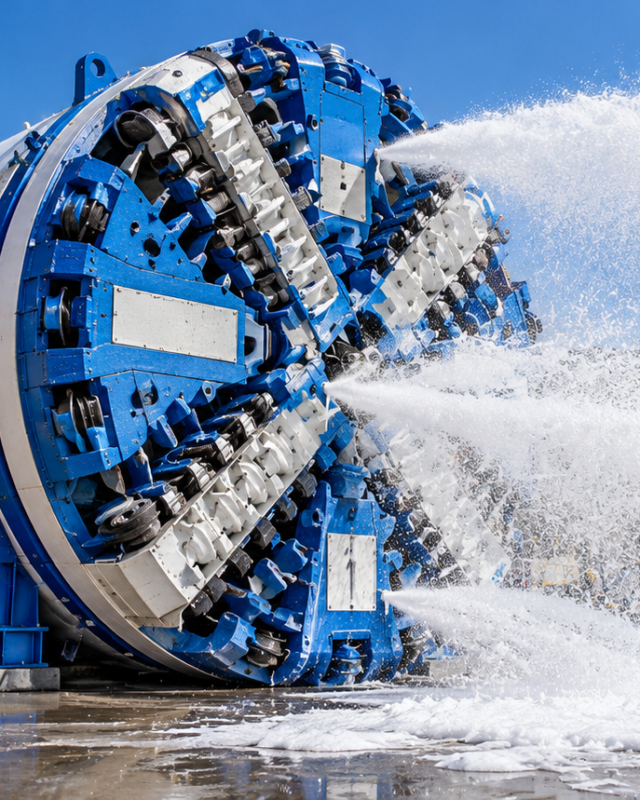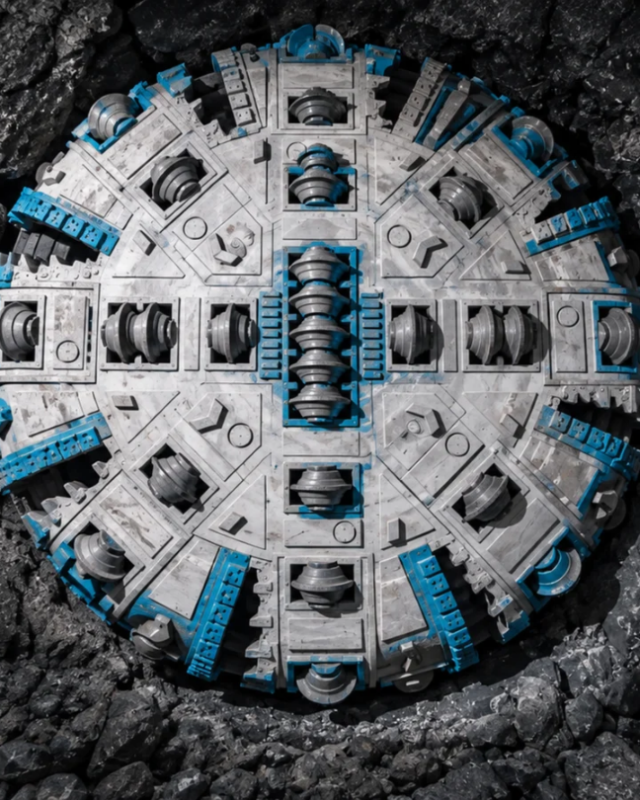
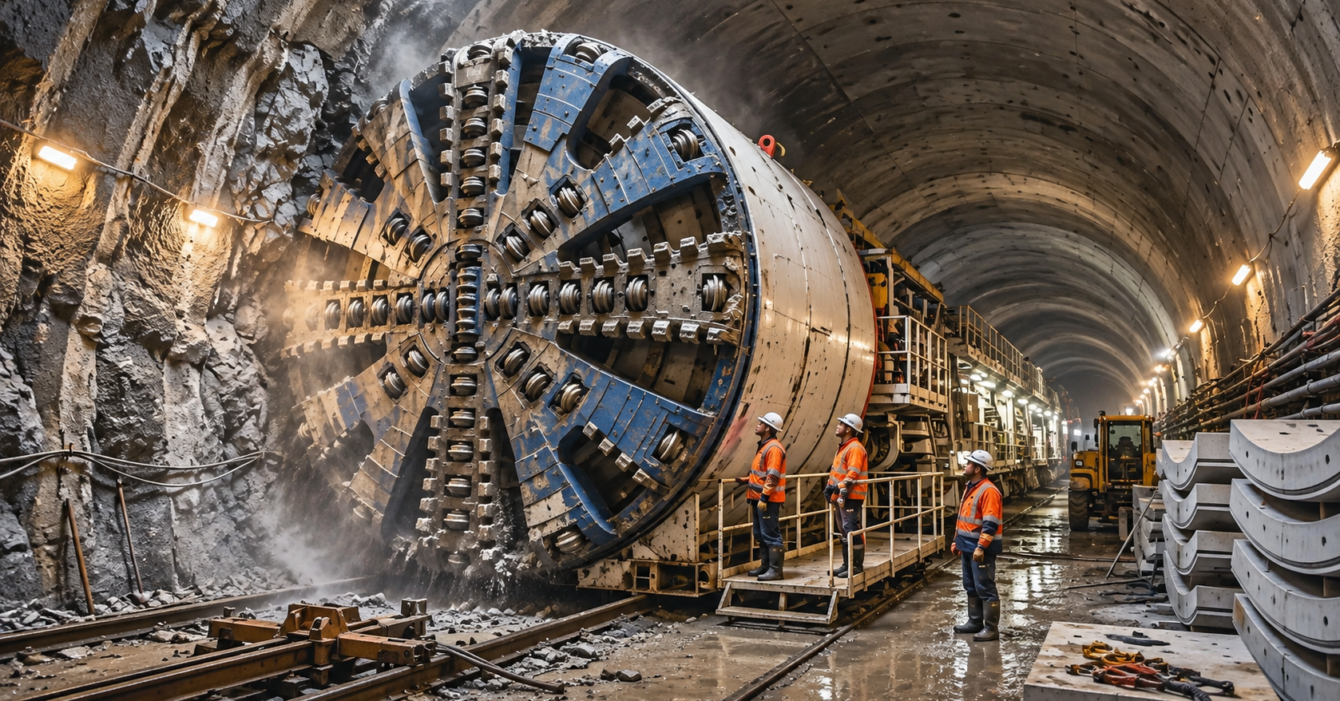
Tunnel boring machines (TBMs) are essential equipment in many modern tunnelling projects, from metro systems and railway tunnels to large-scale underground infrastructure. By mechanising excavation and segmental tunnel lining installation, TBM technology offers significant advantages in productivity, precision and the ability to operate under challenging geological conditions.
However, even with advanced TBM systems, tunnelling operations continue to present considerable technical challenges. What are the most common technical issues encountered during TBM operation, and how can they be effectively controlled? This article explores real-world tunnelling challenges and the role of specialised chemical technologies and solutions in optimising construction performance.
What causes technical challenges during TBM operation?
In mechanised tunnelling, a TBM does not operate under constant ground conditions. Geological formations can vary significantly along the tunnel alignment, ranging from highly cohesive clay and water-saturated sand to mixed ground conditions with varying hardness and permeability.
Particularly in metro and urban underground infrastructure projects, tunnelling often takes place beneath densely developed areas, complex utility networks and existing structures, where stringent ground deformation control is essential.
Technical issues and challenges during TBM operation generally arise from three main groups of factors:
- Variability in geological and groundwater conditions: Changes in soil and rock composition, geomechanical properties, permeability and groundwater pressure can increase the complexity of maintaining excavation face stability and controlling ground deformation.
- Interaction between the TBM and surrounding ground: Excavated material characteristics, resistance, friction, adhesion and abrasion can directly affect excavation performance, muck transport efficiency and operational stability.
- Adaptability to actual construction conditions: Differences between geotechnical investigation data and actual ground conditions, together with unexpected variations encountered during excavation, require continuous assessment and adjustment of operating parameters, construction methods and material solutions to maintain tunnelling efficiency.
The combined influence of these factors means that successful TBM operation requires more than equipment control alone. An integrated approach combining mechanical technology, geotechnical engineering, specialised material solutions and construction monitoring is fundamental to proactively addressing technical challenges, maintaining operational continuity and improving mechanised tunnelling performance.
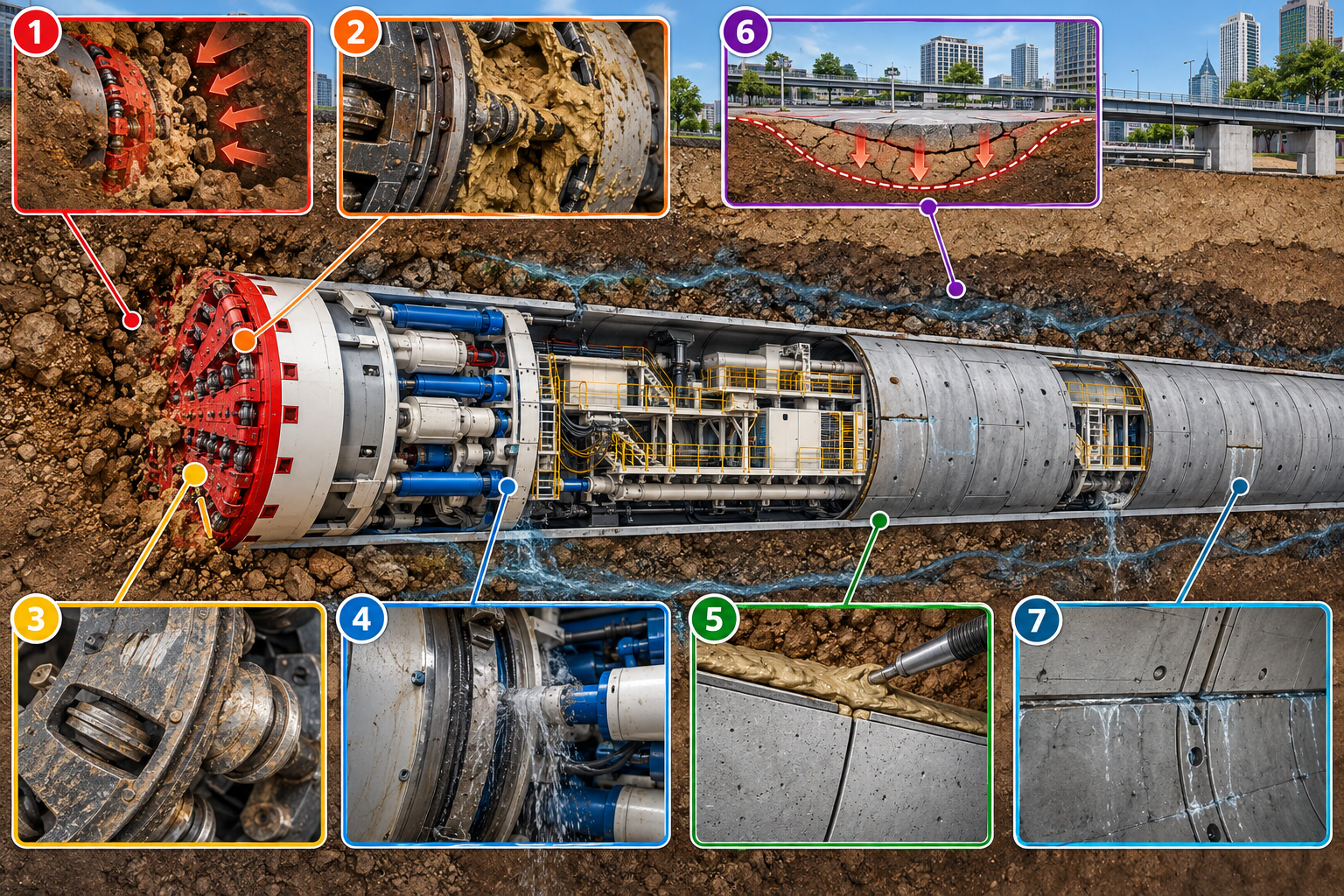
Common technical issues in TBM tunnelling and their control solutions
1. Excavation face instability and pressure fluctuations
Excavation face instability is one of the most critical geotechnical risks in TBM tunnelling, particularly in soft ground, permeable formations and areas with high groundwater pressure.
For Earth Pressure Balance (EPB) TBMs and Slurry TBMs, face support pressure must be controlled according to the prevailing ground conditions and operating method. When pressure is not maintained within the design limits, the ground ahead of the cutterhead may become unstable, potentially leading to ground deformation or more severe incidents.
Common technical issues:
- Sudden changes in geological formations or the presence of heterogeneous soil layers.
- Fluctuations in groundwater pressure.
- Excavated soil properties that do not meet face support requirements.
- An imbalance between TBM advance rate and the volume of excavated material removed.
- Difficulties in controlling the consistency and condition of material within the excavation chamber.
Key warning signs to monitor:
Abnormal fluctuations in excavation chamber pressure, cutterhead torque, muck volume, TBM advance rate and ground monitoring data may indicate conditions requiring further assessment.
Control solutions:
The primary measure is to maintain face support pressure within the design requirements, supported by continuous monitoring of excavated material quantities, TBM operating parameters and ground movements.
For EPB TBMs, soil conditioning technology using specialised foaming agents and polymers can improve the plasticity, consistency and transportability of excavated soil. When properly conditioned, the material within the excavation chamber can better meet the requirements for pressure transmission and discharge through the screw conveyor.
However, soil conditioning performance depends on soil composition, moisture content, operating pressure and product characteristics. The selection of chemical conditioning systems should therefore be based on laboratory testing and actual project operating conditions.
2. Clay adhesion and Clogging of the cutterhead and muck transport system
In geological formations containing high proportions of clay minerals, particularly under moisture and mechanical conditions that promote adhesion, excavated material may accumulate on the cutterhead, inside the excavation chamber or within the screw conveyor.
This phenomenon, commonly known as clogging, is a significant operational challenge that can substantially reduce TBM excavation efficiency.
Common technical issues:
- Abnormally high cutterhead torque.
- Excavated soil forming cohesive lumps that are difficult to transport.
- Unstable screw conveyor operation.
- Reduced TBM advance rate.
- Increased downtime for inspection and cleaning.
Prolonged clay adhesion and clogging can increase resistance within the excavation and muck transport systems, making it more difficult to maintain stable operating conditions.
Control solutions:
Effective control requires an assessment of clay characteristics, moisture conditions, adhesion potential and muck transport performance. Under suitable conditions, specialised foaming agents, polymers and anti-clogging additives can help improve excavated soil consistency, limit material agglomeration and reduce friction during transport. This is a key application of soil conditioning technology, particularly for EPB TBMs operating in highly cohesive and plastic ground.
Optimising soil conditioning formulations should be based on tests using actual project soil samples rather than applying a fixed chemical dosage or formulation across all geological conditions.
Related Article: TBM Soil Conditioning: Technology, Working Principles and Applications in Tunnel Construction
3. Friction, abrasion and reduced equipment performance
During tunnelling operations, the cutterhead, cutting tools and muck transport system are continuously exposed to mechanical forces generated by excavated materials. When ground conditions include highly abrasive sand, gravel, cobbles or hard rock, equipment wear rates may increase, affecting operational efficiency and maintenance intervals.
In addition, friction and material accumulation within the system can lead to increased energy consumption.
Common technical issues:
- Hardness, abrasivity and mineralogical composition of soil and rock.
- Particle size and shape.
- Cutterhead torque, thrust force and rotational speed.
- Condition of cutting tools and lubrication systems.
- Characteristics of excavated material after treatment or conditioning.
Control solutions:
Appropriate cutting tool selection, wear inspection and preventive maintenance remain fundamental measures for controlling mechanical wear. Under suitable ground conditions, soil conditioning technology can help reduce friction within the excavation system and improve muck transport performance.
In parallel, main bearing lubrication and sealing greases are used to meet the protection and lubrication requirements of the corresponding mechanical components. It is important to recognise that while soil conditioning chemicals can help improve operating conditions, they do not replace mechanical wear protection measures or regular equipment maintenance.
4. Groundwater ingress through the TBM tail sealing system
For shield TBMs equipped with precast segmental tunnel linings, the shield tail is a critical area where sealing performance must be carefully controlled. At this location, the tail brush sealing system works together with specialised sealing grease to form a barrier against the ingress of groundwater, fine soil particles and annulus backfill grout into the TBM. If the sealing system does not function effectively, water and external materials may enter the machine, potentially affecting construction safety and operational continuity.
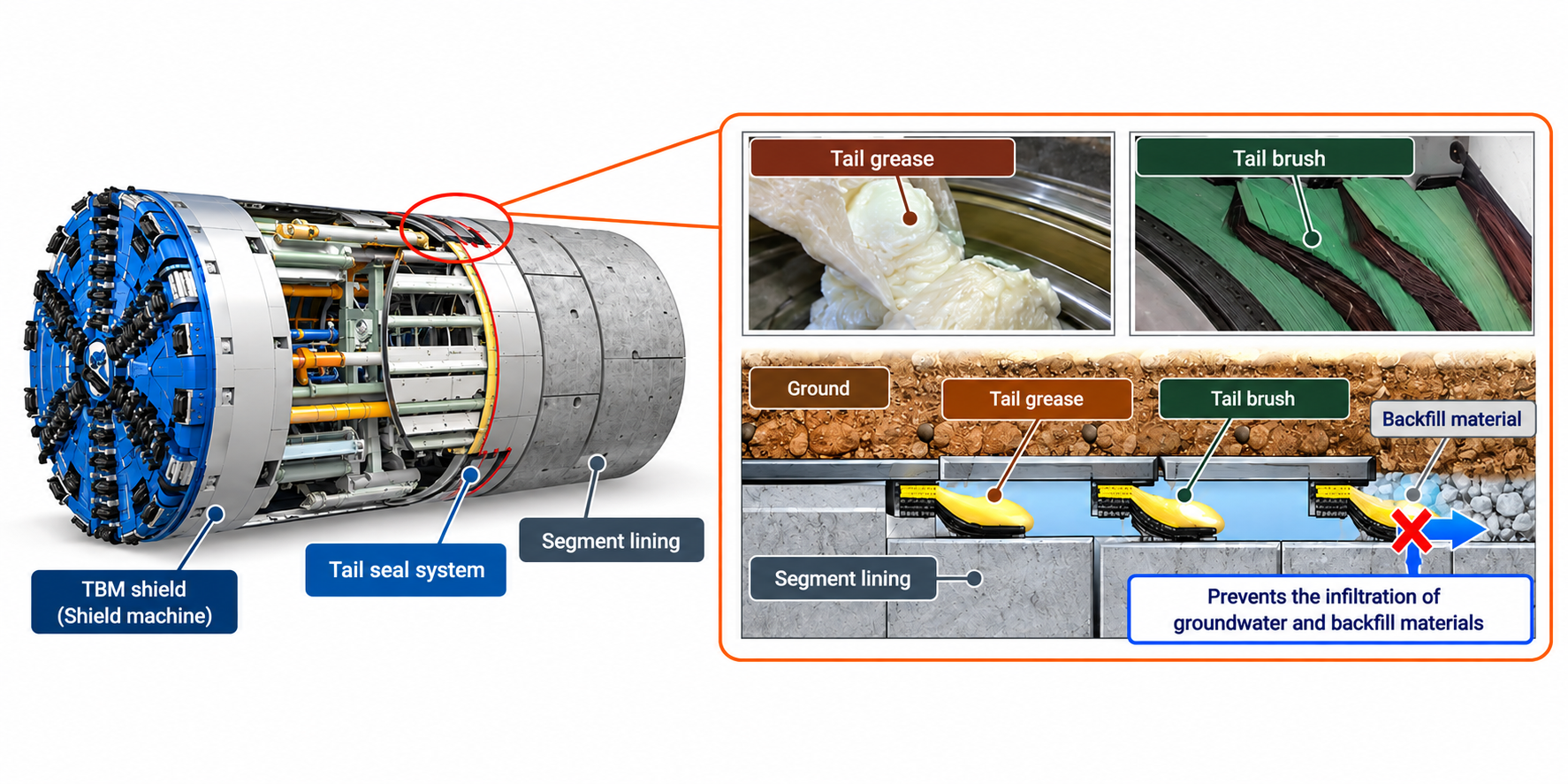
Common technical issues:
- High groundwater pressure.
- Tail seal grease unsuitable for the operating conditions.
- Damaged or deteriorated tail sealing brushes.
- Inappropriate grease injection pressure or delivery rate.
- Relative movement between the shield tail and segmental tunnel lining.
Control solutions:
Tail seal grease should provide suitable water resistance, pressure stability, adhesion and pumpability. At the same time, the condition of the sealing brushes, grease injection pressure and compatibility between the sealing material and pumping equipment must be carefully controlled.
Under challenging operating conditions, combining specialised sealing materials with an appropriately designed grease delivery system is essential for maintaining effective protection of the shield tail area.
5. Inadequate filling of the annular gap behind the tunnel lining
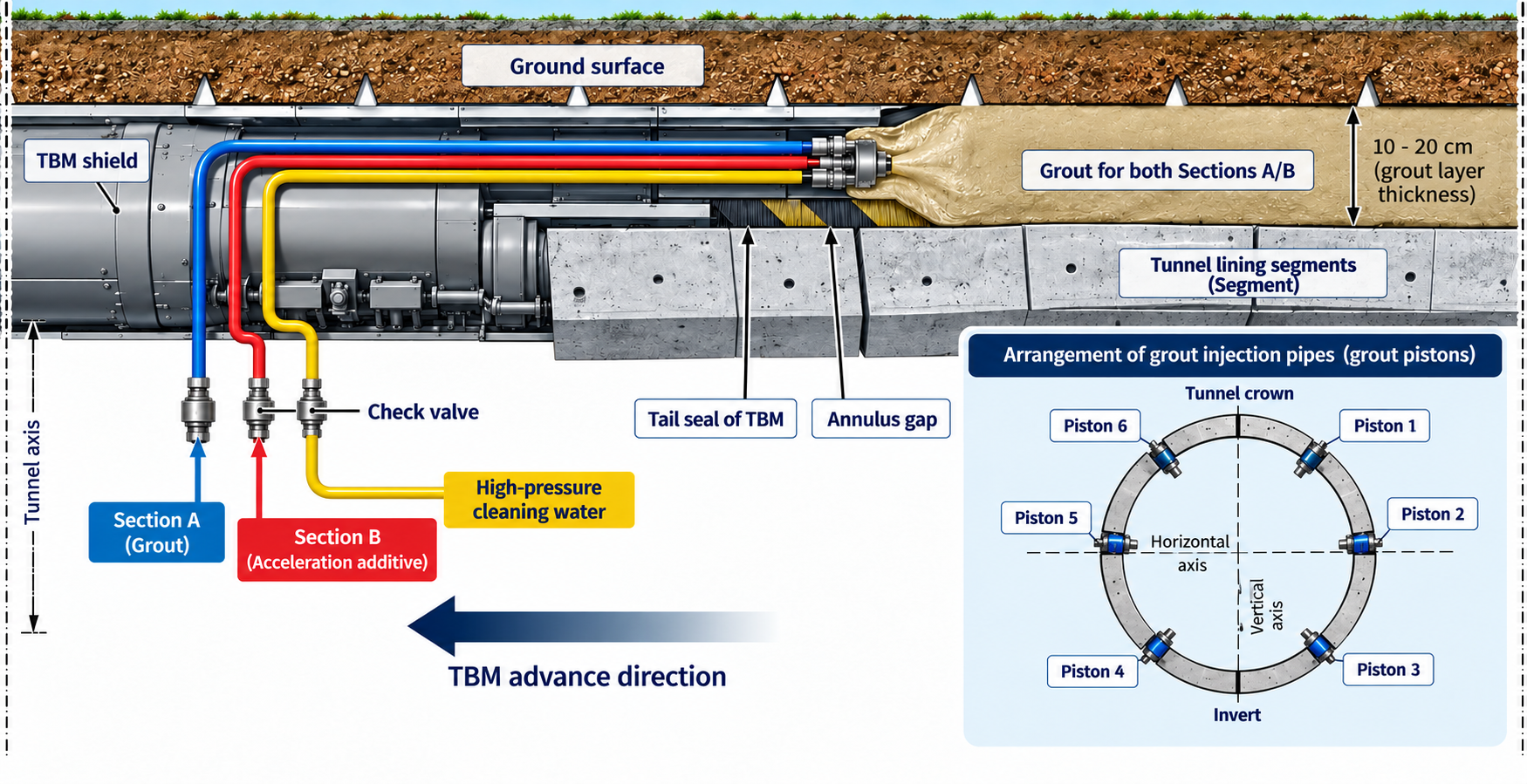
In shield TBM tunnelling, the excavated diameter is generally larger than the external diameter of the installed segmental lining, creating a void between the tunnel lining and the surrounding ground. This void is known as the annular gap.
If the annular gap is not filled promptly or the injected grout does not meet the required performance criteria, ground movement may continue, increasing the risk of surface settlement and adversely affecting the structural behaviour of the tunnel lining.
Common technical issues:
- Uneven grout distribution within the annular gap.
- Inadequate pumpability or flowability.
- Setting time incompatible with the excavation cycle.
- Grout bleeding, segregation or reduced stability.
- Insufficient control of grout injection pressure and volume.
Control solutions:
Annulus grouting technology is used to fill the void behind the segmental tunnel lining, facilitate load transfer, support structural stability and limit ground movements. Depending on the construction method, geological conditions and project requirements, grouting systems may be designed as one-component (1K) or two-component (2K) systems.
Important performance characteristics include:
- Pumpability and mixture stability.
- Workability time and setting time.
- Void-filling capability.
- Strength development and volume stability.
- Compatibility with pumping equipment and ground conditions.
For two-component grouting systems in particular, controlling the mixing process and reaction time between the components is essential to meeting the continuous operating cycle of the TBM.
Related Article: TBM Annulus Grouting: Role and Solutions in TBM Tunnelling
6. Ground surface settlement and impacts on adjacent structures
In urban tunnelling projects, controlling ground surface settlement is a critical requirement for protecting existing buildings and surrounding infrastructure. Settlement can result from various factors, including an imbalance in excavation face pressure, ground volume loss or inadequate filling of the annular gap behind the tunnel lining.
Common technical issues can cause settlement:
- Face instability or inadequate control of face support pressure.
- Excavated soil volume exceeding the anticipated quantity.
- Delayed or incomplete annulus grouting.
- Ground deformation and consolidation characteristics.
- Interaction between tunnelling activities and existing structures.
Control Solutions
Effective settlement control requires a comprehensive approach combining geotechnical investigation, engineering design, ground movement monitoring and adjustments to TBM operating parameters.
Three closely interconnected measures are particularly important:
- Face pressure control: Helps limit excavation face instability and ground loss during tunnelling.
- Appropriate soil conditioning: Supports stable operating conditions for EPB TBMs.
- Annulus grouting: Fills the void behind the segmental tunnel lining and helps minimise ground movements.
In sensitive areas, additional measures such as ground treatment injection or compensation grouting may be considered where supported by an appropriate engineering design and technical method statement. Importantly, these measures should be implemented in coordination with the monitoring system rather than applied as isolated corrective actions after ground deformation has already occurred.
7. Water leakage at segment joints and tunnel lining defects
Following installation of the segmental lining rings, the watertightness of the tunnel structure remains a critical factor in ensuring construction quality and long-term durability. Water may enter through joints between precast concrete segments, concrete cracks, structural penetrations or localised defects.
Depending on groundwater conditions and leakage severity, water ingress may affect the internal tunnel environment, finishing works and long-term operational requirements.
Control solutions:
Quality control should cover precast concrete segments, waterproofing gasket systems, segment installation procedures and contact conditions at segment joints.
Where additional remedial treatment is required, specialised injection technology can be applied to:
- Seal leaking joints and cracks.
- Fill localised voids.
- Repair defects and support structural strengthening.
- Stabilise or seal surrounding ground where necessary.
Material systems such as polyurethane (PU), epoxy and acrylic gels can be selected according to waterproofing requirements, movement conditions, crack characteristics and treatment objectives.
The role of specialised chemical technologies in TBM tunnelling
In mechanised tunnelling, even the most advanced TBM systems can only achieve their full potential when ground conditions, equipment performance and supporting materials are managed in an integrated manner. Particularly in the face of unpredictable geological variations and groundwater pressure, specialised construction chemicals are more than supplementary materials. They are an important technical component that contributes to the stability and efficiency of tunnelling operations.
By modifying material properties, managing interactions between equipment and the surrounding ground, and meeting sealing and structural stability requirements, chemical technologies help enhance the adaptability of TBM systems under challenging construction conditions. When appropriately applied, these solutions can help minimise operational interruptions, optimise equipment performance and support construction quality control. However, effectiveness depends not merely on the use of chemicals but on selecting the right technology, the right materials and the right application conditions.
Every geological formation presents different geomechanical properties, groundwater conditions and technical requirements. A solution that performs effectively under one set of conditions may not deliver the same results under another. For this reason, specialised chemical systems should be considered from the construction planning stage, based on geotechnical investigation results, TBM equipment characteristics, design requirements and operating parameters. Their application should also involve a coordinated process of material testing, technical consultation and adjustment according to actual site conditions.
Ultimately, the value of chemical technology extends beyond resolving problems as they arise. It also lies in its proactive role in risk control, maintaining construction continuity and improving overall project performance.
MC Underground – Advanced German chemical technologies and solutions for TBM Tunnelling
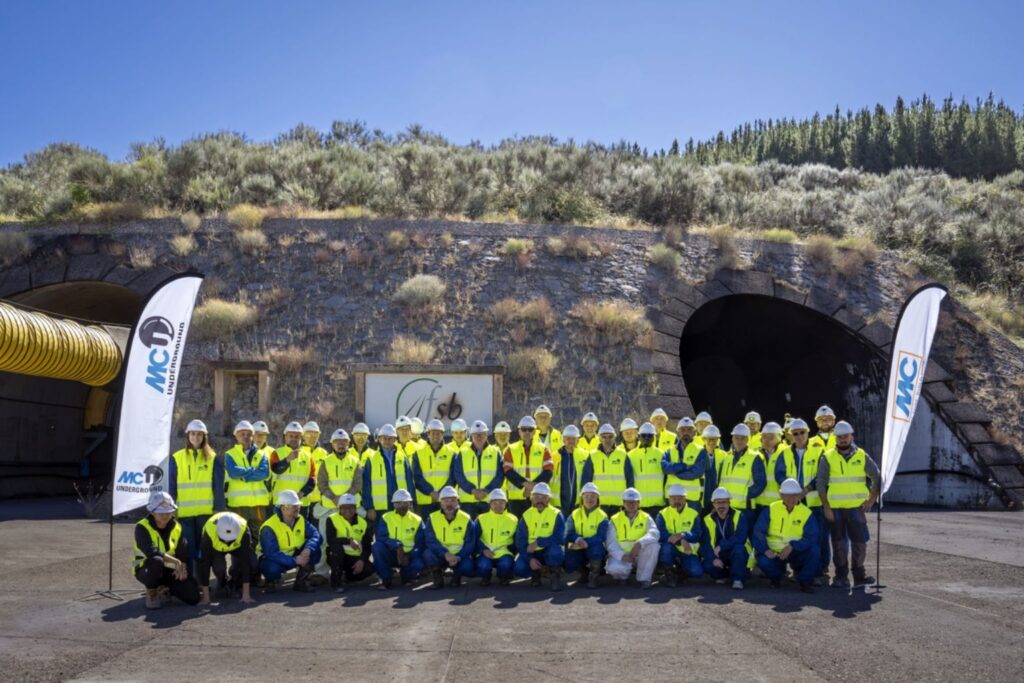
MC Underground (MCU) is a specialised business unit of MC-Bauchemie Group, Germany, a globally established construction chemicals group with more than 60 years of experience, a presence in over 50 countries and more than 3,500 employees worldwide.
As a Global Partner for Underground Solutions, MCU provides specialised chemical technologies and solutions tailored to the specific requirements of tunnelling and mining projects. Combining global technical expertise, practical industry knowledge and an integrated system-based approach, MCU delivers reliable, effective solutions designed to meet the demanding requirements of underground construction projects worldwide.
For TBM tunnelling, MCU offers a comprehensive portfolio of specialised chemical technologies and solutions, including:
- Soil Conditioning & Stabilisation
- Tail Sealants
- Annulus Backfill Grouting Systems
- Main Bearing Lubrication & Sealing Greases
- Admixtures for Precast Tunnel Lining Segments
- Specialised Injection Systems
What distinguishes MCU’s approach is not simply its product portfolio, but the integration of chemical technology with in-depth knowledge of ground conditions, TBM equipment and construction processes. This enables solutions to be selected and applied according to specific project requirements, rather than relying on a single standard approach for all tunnelling conditions.
Explore MC Underground’s Comprehensive TBM Chemical Solutions and Technologies