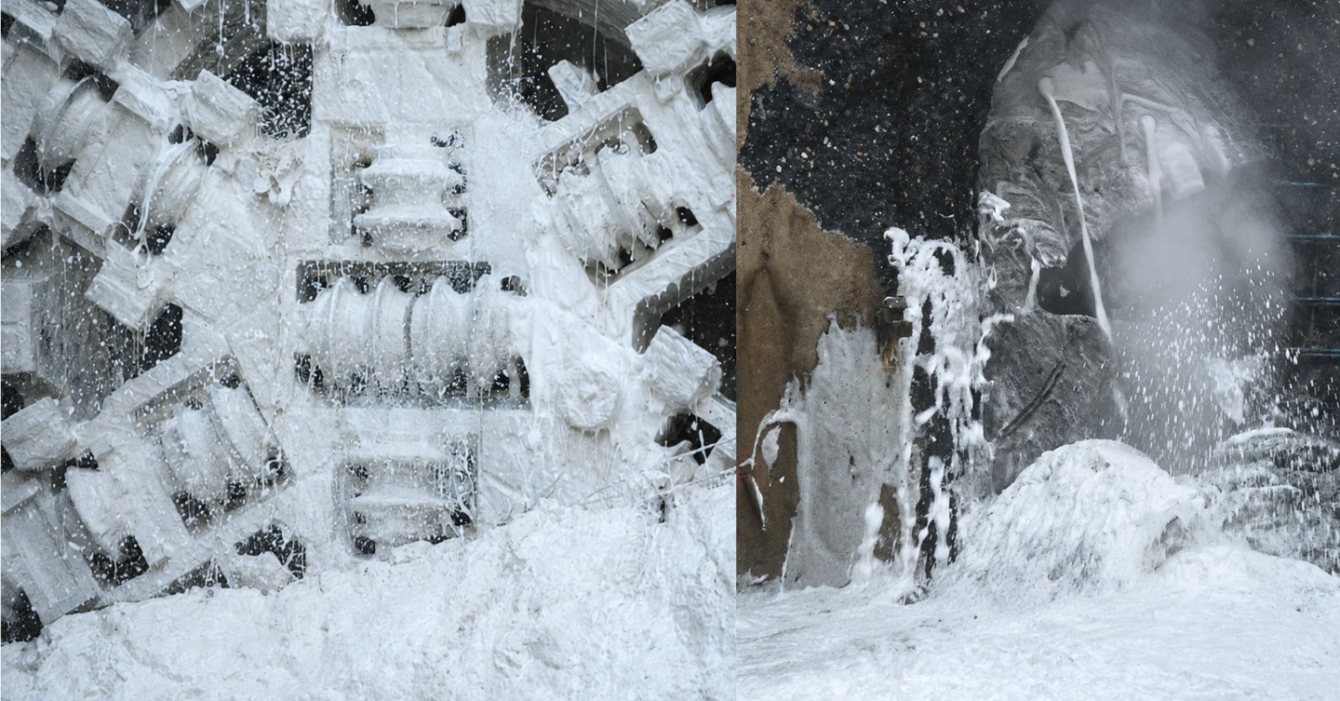
Behind every advance of a Tunnel Boring Machine (TBM) lies a series of technical operations that must be precisely coordinated to ensure tunnel stability. Among these, TBM annulus grouting, also known as backfill grouting, plays a critical role in filling the annular gap behind the tunnel lining, supporting ground stability and controlling the risk of surface settlement.
Although performed behind the TBM shield and largely hidden from direct observation, this operation significantly influences ground deformation control, settlement mitigation and the structural performance of the precast segmental tunnel lining.
So, what is annulus grouting, why is it important in TBM tunnelling, and which technical requirements should be considered when selecting a suitable grouting system for a project?
1. What Is the Annular Gap in TBM Tunnelling?
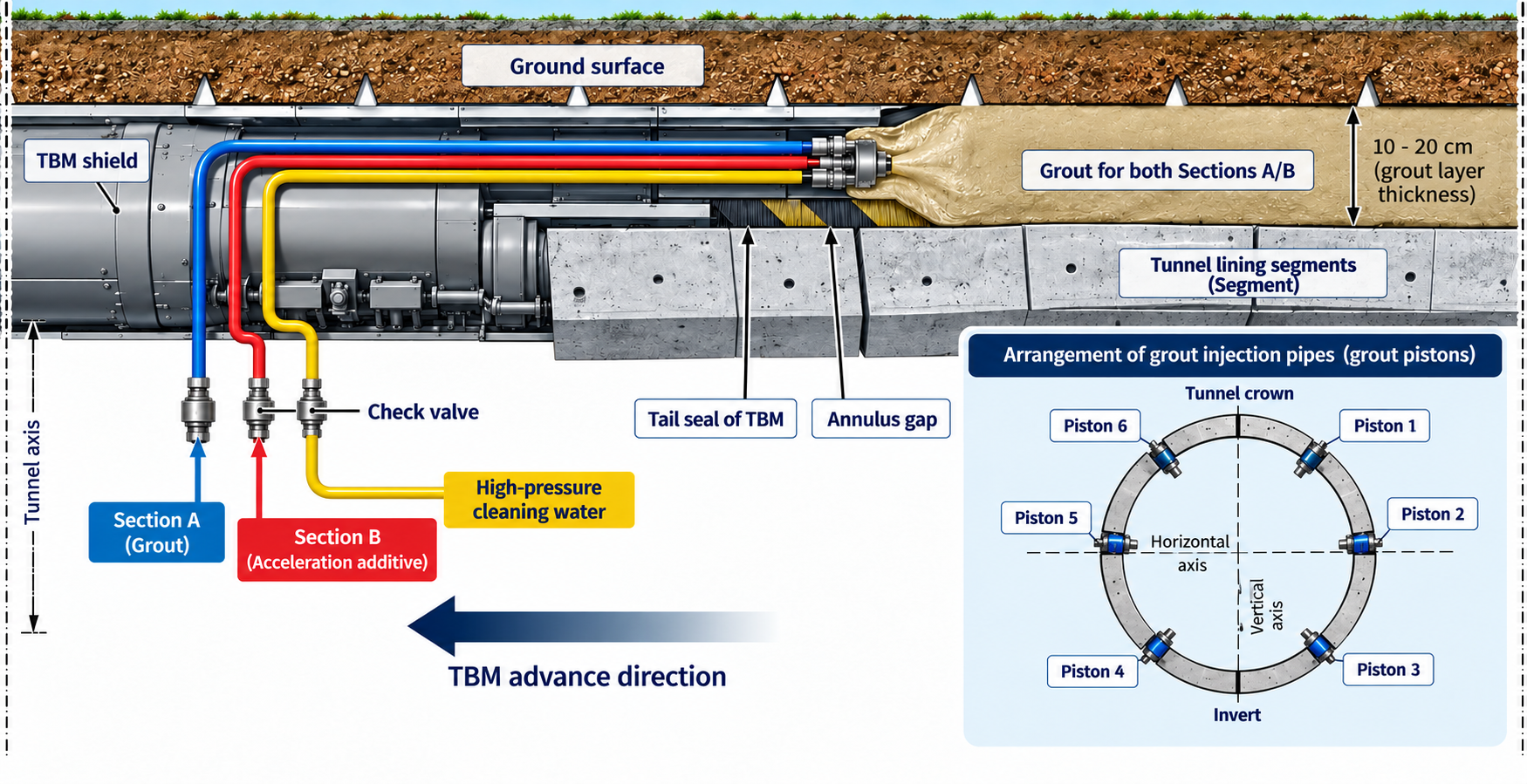
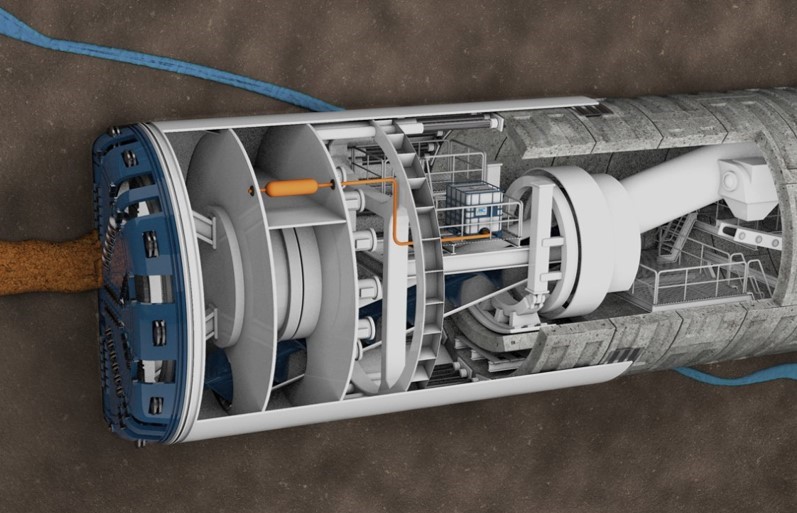
In mechanised tunnelling using shielded TBMs and precast segmental linings, the excavation diameter is generally larger than the outer diameter of the precast concrete tunnel lining segments. This difference creates an annular void between the outer surface of the tunnel lining and the surrounding excavated ground, known as the annular gap.
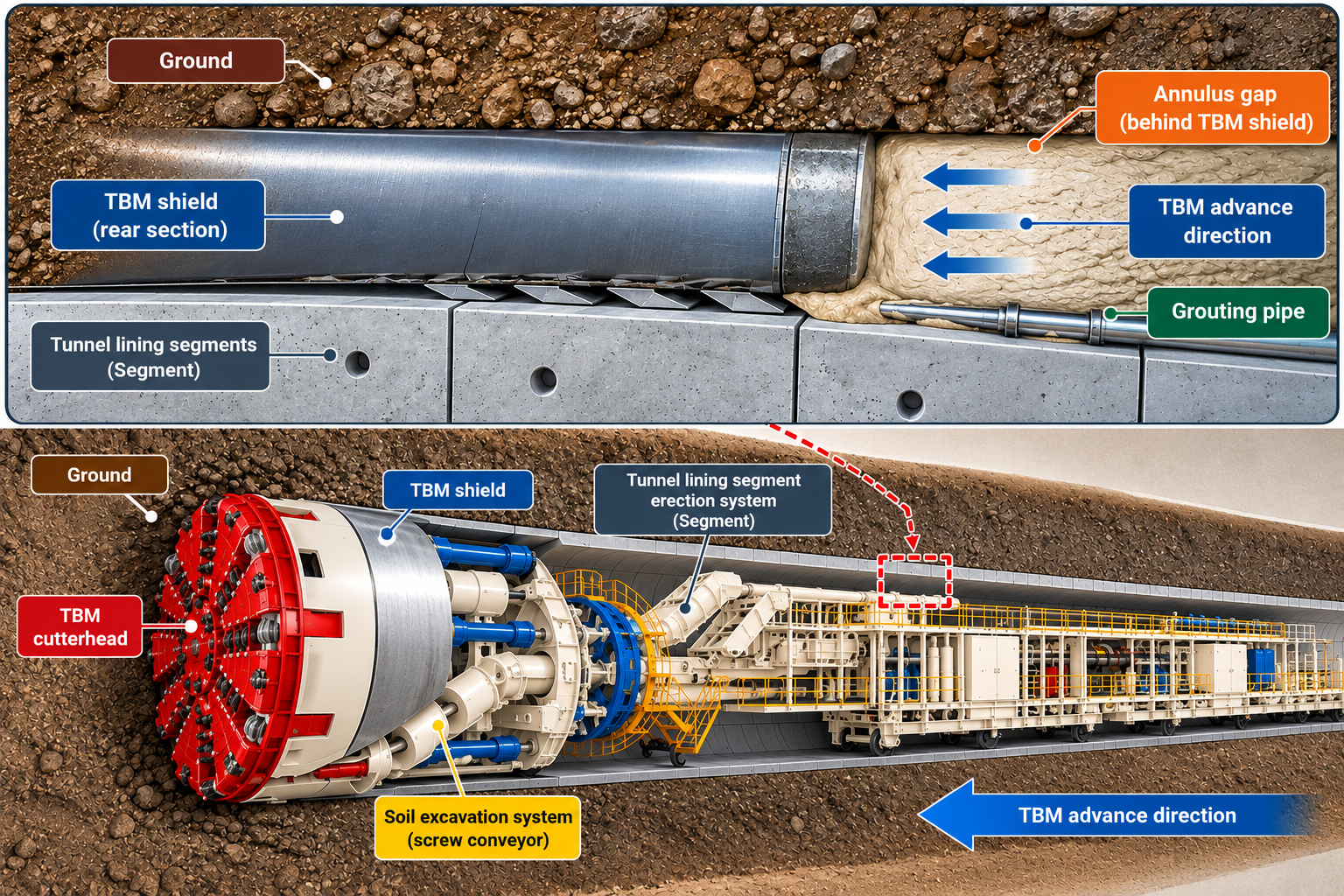
If this gap is not filled promptly and uniformly, the surrounding ground may move into the void, increasing the risk of ground deformation and surface settlement. At the same time, the tunnel lining may not receive the uniform support required by the structural design.
To address this issue, backfill grout is injected into the annular gap behind the tunnel lining through dedicated pumping systems and pipelines. Depending on the TBM configuration, grout may be injected through ports at the shield tail or through designated injection points in the tunnel lining segments.
Grouting operations are typically coordinated with TBM advance and segment installation to minimise the time during which the annular gap remains unfilled.
It is important to distinguish annulus grouting from ground improvement grouting. Annulus grouting primarily aims to fill the void behind the tunnel lining, whereas ground improvement grouting is intended to enhance ground properties and improve the stability of soil or rock formations in areas requiring treatment.
2. The Role of Annulus Grouting in TBM Tunnel Construction
A properly designed annulus grouting system does more than simply fill the void behind the tunnel lining. More importantly, it helps establish effective contact and load transfer between the segmental lining and the surrounding ground.
2.1. Minimising Ground Deformation and Surface Settlement
As a TBM advances, the formation of the annular gap may allow the surrounding ground to move into the newly created void. If the gap is not adequately filled, ground movements may propagate towards the surface and cause settlement.
This is particularly important for metro tunnels, urban railway projects and tunnels passing beneath densely developed areas.
Timely grouting, combined with appropriate control of injection pressure and grout volume, helps minimise ground movement into the annular gap. However, effective settlement control also depends on other factors, including tunnel face pressure, geological conditions, ground volume loss and TBM operating parameters.
2.2. Providing Uniform Support to the Tunnel Lining
Precast segmental tunnel linings are designed to interact structurally with the surrounding ground. Therefore, the quality of contact between the tunnel lining and the ground plays an important role in overall structural performance.
When the annular gap is adequately filled and the grout develops the required mechanical properties, the hardened grout layer helps provide relatively uniform support behind the lining, reducing localised voids and discontinuities in contact.
This contributes to the stability of the segmental lining and facilitates load transfer between the tunnel structure and the surrounding ground.
2.3. Helping Control Water Flow Paths Behind the Tunnel Lining
In water-bearing ground, unfilled voids or inadequately grouted areas may create potential water flow paths along the outside of the tunnel lining.
Selecting a grouting system with suitable filling performance and permeability characteristics can help control this risk according to project-specific requirements.
However, annulus grouting does not replace the tunnel lining waterproofing system. Overall watertightness also depends on the sealing gaskets between segments, installation quality, joint design and other associated waterproofing measures.
2.4. Supporting Continuous and Efficient TBM Operations
In TBM tunnelling, operational efficiency depends on the effective coordination of multiple technical systems. If the backfill grout has unsuitable workability, is prone to segregation, is difficult to pump or does not set within the required timeframe, construction operations may be disrupted.
Conversely, a grout system designed to match the equipment and actual site conditions supports stable pumping operations, reduces the risk of blockages and helps maintain a consistent excavation cycle.
Therefore, selecting a suitable TBM backfill grout is not simply a matter of choosing a material. It requires careful coordination between grout mix design, pumping equipment and on-site operating conditions.
3. Common Types of TBM Annulus Grouting Systems
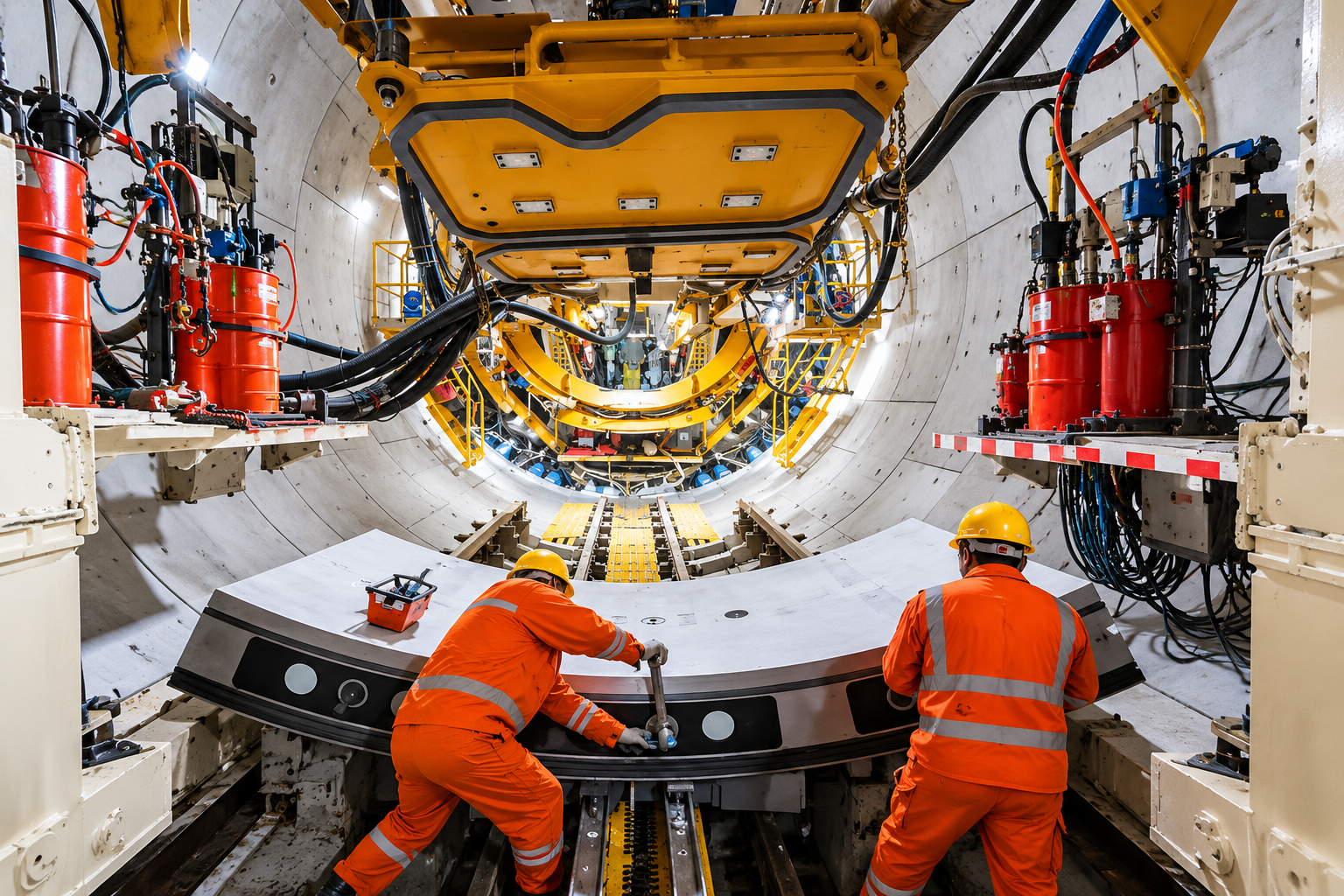
In TBM tunnel construction, backfill grouting systems can be designed using different configurations. Two commonly used categories are one-component grout (1K grout) and two-component grout (2K grout).
Each system has distinct characteristics in terms of composition, workability, setting behaviour and equipment requirements. The selection should be based on geological conditions, tunnel design and the specific construction methodology.
3.1. One-Component TBM Grout (1K Grout)
A one-component grout is prepared as a single, homogeneous mixture before being introduced into the pumping system.
Depending on the mix design, the grout may contain hydraulic binders, mineral materials, water and various admixtures to regulate workability and strength development.
A key characteristic of the 1K grouting system is that it does not require a separate activator component to be mixed at the injection point, as is typically the case with A/B grouting systems.
To ensure reliable application, the grout mix must maintain homogeneity and pumpability for a period compatible with the construction process. At the same time, its setting behaviour and strength development must meet the requirements for supporting the tunnel lining.
Depending on project conditions, a 1K grout system may be an appropriate option when its material properties and the planned construction procedures satisfy the relevant technical requirements.
3.2. Two-Component TBM Grout (2K Grout)
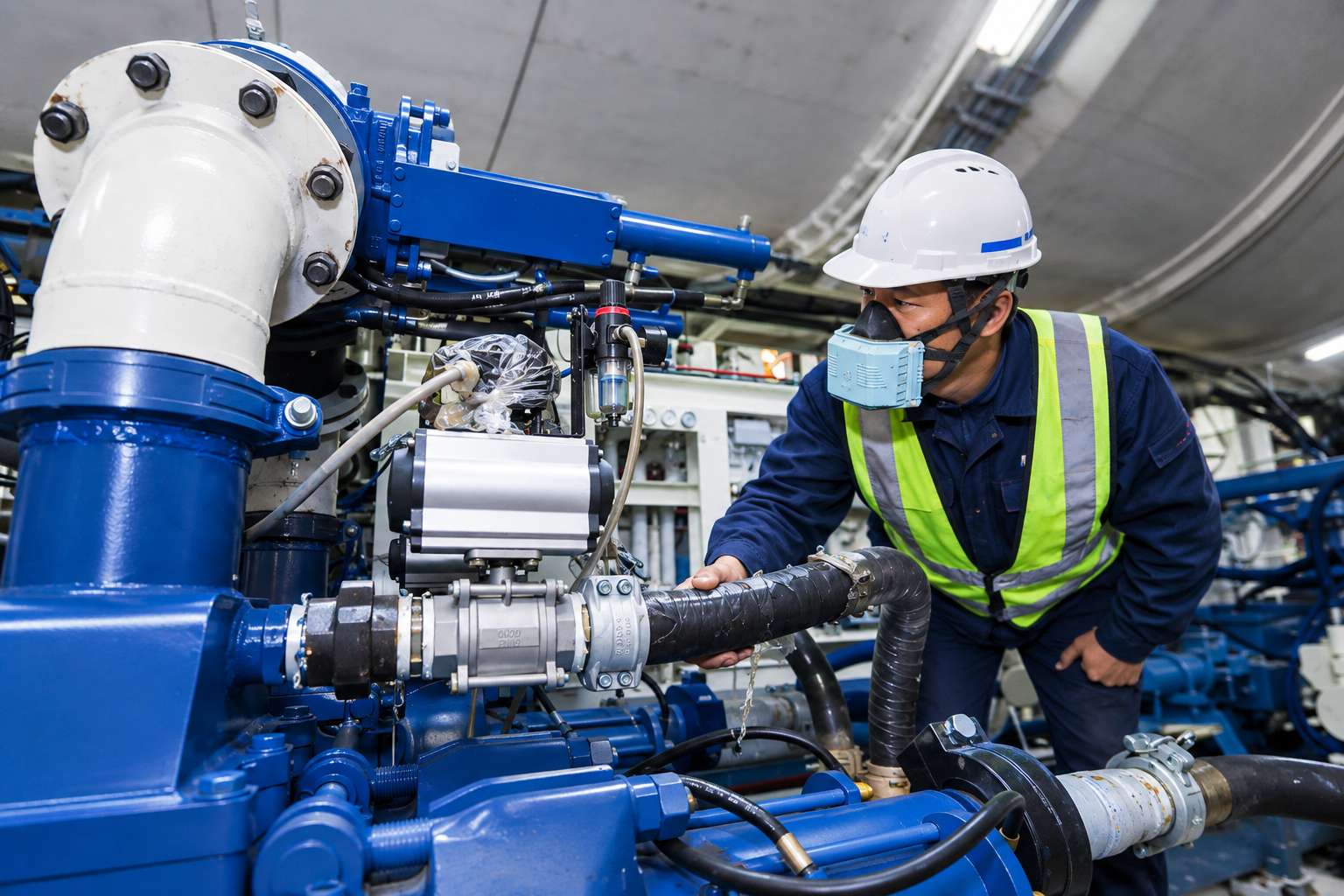
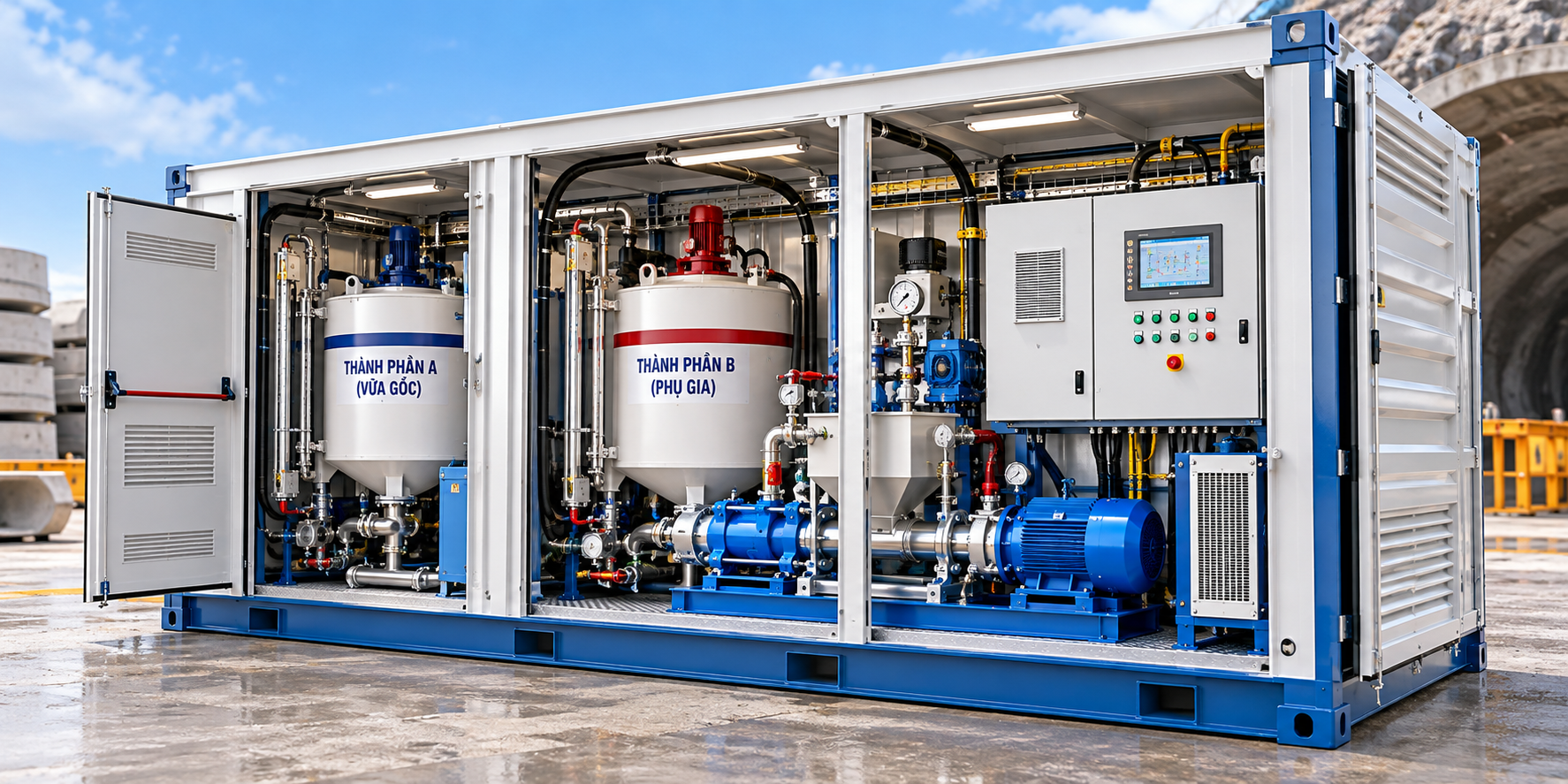
Unlike one-component systems, two-component TBM grout generally consists of two separately prepared and conveyed components that are mixed near the injection point.
In hydraulic binder-based A/B grouting systems, Component A is typically a grout mixture designed to maintain pumpability for the required period. Component B is an activator introduced to accelerate gel formation or setting when the two components come into contact.
An important advantage of this configuration is its ability to separate two requirements that may otherwise conflict: maintaining sufficient workability during transport and pumping, while enabling a rapid change in material consistency after injection into the annular gap. For example, within MC-Bauchemie’s grouting solutions, MC-Montan Grout 01 is an activator for two-component backfill grouting systems, designed to initiate gel formation and help regulate early strength development. Meanwhile, MC-Montan Grout 02 is an admixture for Component A, supporting improved grout stability, dispersion and pumpability.
However, 2K grouting systems also require appropriate control of the mixing ratio, material flow rates, pumping equipment and compatibility between the two components.
3.3. Comparison of One-Component and Two-Component TBM Grouts
| Criteria | 1K Grout | 2K Grout |
|---|---|---|
| System configuration | A single, complete grout mixture | Two separately supplied components |
| Mixing process | Mixed before pumping | Components mixed near the injection point |
| Setting control | Controlled through mix design and admixtures | May use a separate activator component |
| Material supply system | No separate Component B activator line required | Requires control of two material streams |
| Operational requirements | Focus on maintaining workability and pumpability | Requires control of workability, mixing ratio and post-injection reaction |
| Application selection | Based on geological conditions, equipment and design requirements | Based on geological conditions, equipment and design requirements |
Each grouting system has its own characteristics and advantages. Therefore, the selection should consider actual construction conditions, ground deformation control requirements and the technical properties that the grout must achieve after injection.
Beyond choosing between 1K and 2K systems, advances in material technology are also creating new opportunities to optimise technical performance and resource efficiency in tunnel construction.
Related article: TBM Annulus Grouting: Applying EFC Technology for Efficient and Sustainable Solutions
4. Key Technical Requirements for TBM Annulus Grouting
Whether using a one-component or two-component system, the quality of annulus grouting depends on how well the material properties match the actual construction conditions.
4.1. Pumpability and Stable Workability
Grout must exhibit suitable rheological properties to be transported through pipelines and distributed effectively within the annular gap.
Viscosity, yield stress, workability retention and mixture stability can all influence pumping pressure, flow rate and filling performance.
If the grout is excessively viscous, pumping difficulties or blockages may occur. Conversely, an unstable mixture may exhibit bleeding, segregation or a loss of homogeneity.
Therefore, the grout mix design should be evaluated under conditions representative of the actual pumping equipment and transportation time.
4.2. Void-Filling Performance and Volume Stability
One of the primary objectives of backfill grouting is to minimise residual voids within the annular gap.
To achieve this, the grout must be capable of distributing effectively throughout the space to be filled while maintaining the volume stability required by the design.
Shrinkage, bleeding or grout loss into the surrounding ground can affect the quality of the grouting operation. These factors should be considered during grout mix design and when developing construction control procedures.
4.3. Setting Time Control and Strength Development
From an operational perspective, an effective grouting system must provide sufficient time for mixing, transportation and pumping, while also developing appropriate mechanical properties after injection.
If the grout sets too early, pumping operations may be interrupted. Conversely, if strength development is too slow relative to design requirements, the initial support provided to the tunnel lining may be compromised.
This is why workability-modifying admixtures, hydration control additives and activators play important roles in many specialised grouting systems.
4.4. Compatibility with Geological and Groundwater Conditions
Groundwater pressure, ground permeability, water chemistry and soil or rock characteristics can all influence the selection of grouting materials.
Under specific conditions, grout systems may need to meet additional requirements relating to washout resistance, chemical durability, permeability or mechanical interaction with the surrounding ground.
For example, MC Underground has developed a cement-free backfill grouting system based on geopolymer technology for swelling rock formations.
This illustrates how the selection of a suitable grout system may sometimes need to address geological challenges beyond the capabilities of conventional grout mix designs.
4.5. Control of Grouting Pressure, Flow Rate and Injection Volume
In addition to material properties, operational parameters play a decisive role in annulus grouting quality.
Insufficient injection pressure may prevent the grout from filling the annular gap adequately. Conversely, excessively high or otherwise inappropriate pressure may adversely affect the surrounding ground or the segmental tunnel lining.
Therefore, grouting operations should follow the approved construction methodology, with continuous monitoring of injection pressure, flow rate, grout volume and relevant instrumentation data.
Grouting pressure and injection volume must be calculated and adjusted to suit project-specific conditions, considering factors such as annular gap dimensions, geological conditions, groundwater pressure, equipment configuration and construction requirements.
5. Conclusion: Annulus Grouting as an Essential Part of TBM Tunnel Construction
In TBM tunnelling, excavation performance is measured not only by the advance rate of the machine but also by the ability to control ground behaviour and ensure the quality of the completed tunnel lining.
Annulus grouting plays an essential role in filling the void behind the segmental lining, supporting ground deformation control and providing the structural support conditions required by the design.
Whether a one-component or two-component grout is selected, the decisive factor remains the compatibility between grout properties, geological conditions and construction methodology.
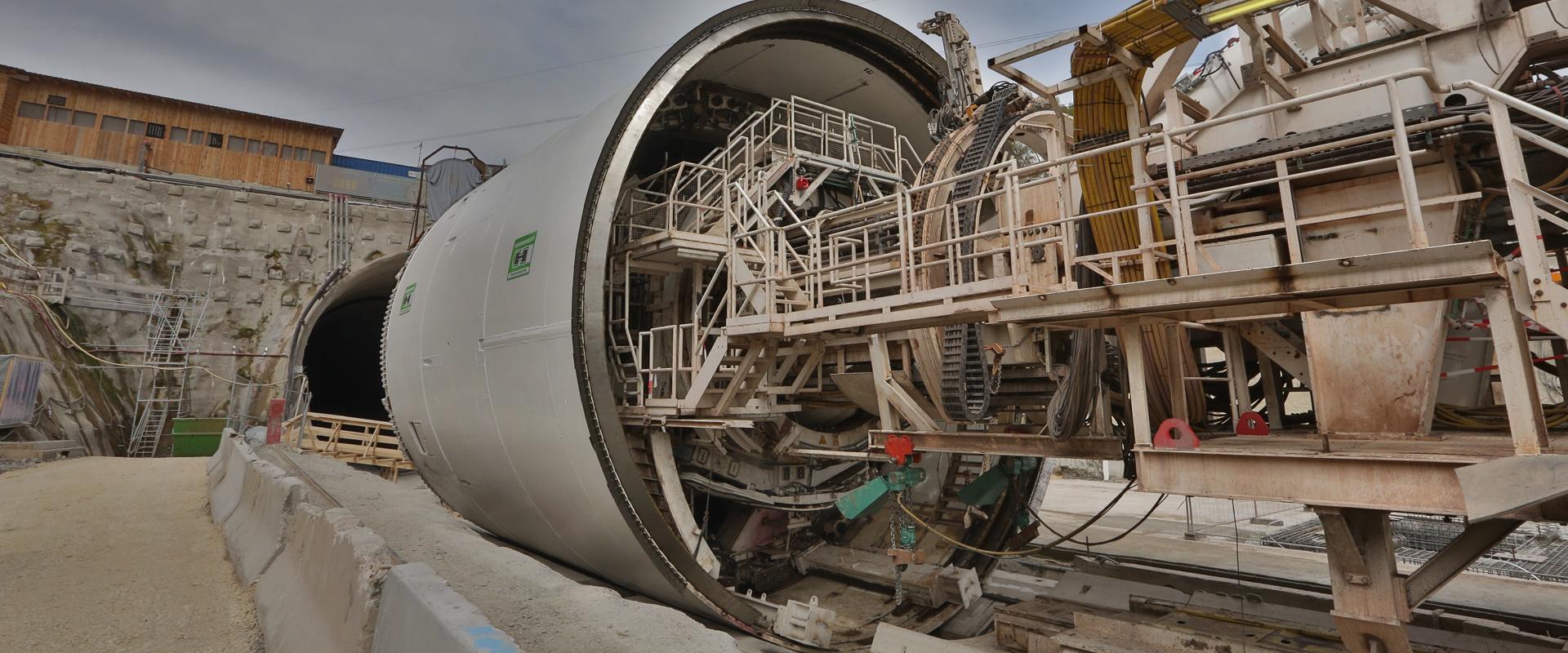
6. Annulus Grouting Solutions from MC Underground
In TBM tunnel construction, variations in geological conditions, tunnel lining design and equipment configuration create increasingly demanding requirements for backfill grouting materials.
To address these challenges, MC Underground (MCU) develops flexible annulus grouting solutions that can be tailored to the specific technical requirements of each project.
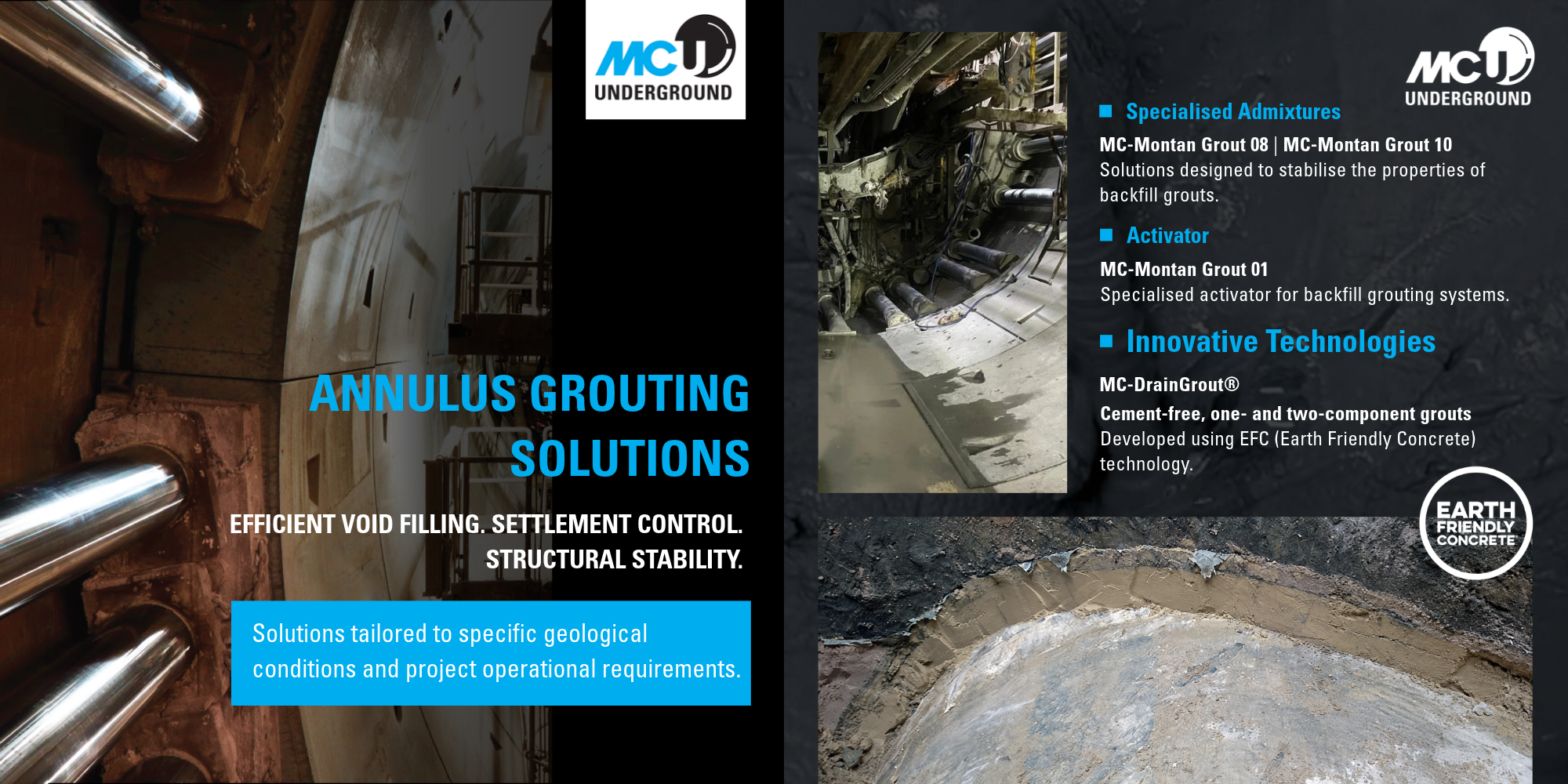
Its portfolio includes one-component and two-component grouting systems, together with specialised admixtures designed to regulate pumpability, mixture stability, workability retention and strength development. These solutions can be adapted to different ground conditions.
MCU also develops specialised systems, including cement-free and permeable backfill grouts, for applications requiring specific material properties.
Beyond material technology, MCU’s technical specialists provide support in solution selection, grout system optimisation and project-specific technical consultation, helping improve on-site implementation efficiency.
As a specialised business unit of MC-Bauchemie, Germany, backed by more than 60 years of experience, a presence in over 50 countries and a global workforce of more than 3,500 employees, MC Underground (MCU) provides specialised chemical and technological solutions for tunnelling and underground construction.
MCU’s strength lies not only in its specialised product portfolio but also in its ability to integrate construction chemicals, application technologies and technical expertise to meet diverse project operational requirements.
TBM Annulus Grouting: Role and Solutions in TBM Tunnelling
TBM Foaming agents: From Technical properties to Application performance in TBM Tunnelling
TBM Soil Conditioning: Technology, Working Principles and Applications in Tunnel Construction