
Groundwater control, ground stability, and structural protection are among the key technical challenges in tunnelling and underground construction. Complex geological conditions, groundwater pressure, and construction-related impacts can lead to water ingress, structural cracking, or the formation of voids requiring specialised treatment.
To address these challenges, injection technology offers versatile solutions for groundwater control, sealing, void filling, and structural strengthening. By utilising specialised chemical injection materials, this technology can meet a wide range of treatment objectives, tailored to actual structural conditions and ground characteristics.
What is injection, how does it work, and what are the key considerations when selecting the right injection solution for tunnelling and underground construction projects?
What Is Injection technology?
Injection is a technique that uses specialised pumping equipment to inject materials into cracks, joints, voids, or soil and rock formations requiring treatment. Its primary objectives include groundwater control, sealing, filling, and strengthening. In the construction industry, this technology is also referred to by terms such as injection, pressure injection, chemical injection, or technical injection, depending on the materials and application.
For tunnelling and underground construction projects, injection grouting can be used to address water leakage in tunnel linings, seal joints, fill voids, and improve ground conditions. Depending on the technical requirements, injection materials may include polyurethane (PU) resins, specialised resin systems, acrylate gels, or suitable cementitious grouts.
One of the key advantages of injection technology is its ability to deliver materials into areas that are difficult to access directly, enabling targeted treatment within structures or ground formations without necessarily requiring extensive intervention.
How does Injection technology work?
In principle, injection technology uses controlled pumping pressure to deliver materials into flow paths, cracks, or voids within structures and surrounding ground. Depending on the material system and treatment objectives, injected materials may undergo chemical reactions, form gels or foams, cure into solid structures, or retain suitable physical properties to create sealing, filling, or strengthening zones. The technical injection process generally involves three main stages.
1. Site assessment and identification of treatment areas
Before implementation, the existing condition of the structure must be assessed to identify the location and underlying causes of the technical problem.
For water leakage, the assessment should consider not only where water becomes visible but also the water flow paths, groundwater pressure, and structural characteristics.
For ground stabilization or void-filling applications, information on geological conditions, permeability, fracture distribution, and the required treatment area provides an essential basis for selecting an appropriate injection method.
2. Injection point installation and material delivery
Once the technical approach has been determined, injection points are established through drilled holes, specialised injection packers, or pre-installed injection systems. The selected material is then delivered into the treatment area using suitable injection equipment. Injection pressure, flow rate, volume, and sequence must be controlled according to the characteristics of the structure or ground formation.
Controlling these parameters is particularly important to ensure that the material reaches the intended treatment zone while minimising undesirable effects such as excessive pressure buildup, crack propagation, or structural and ground displacement.
3. Achieving sealing, filling, or strengthening performance
Once injected, the material performs its intended function according to the specific characteristics of the chemical system. Some materials react with water to form foam or cure, helping stop active water ingress. Other systems can penetrate fine cracks, form sealing gels, or develop bonding properties that support structural strengthening.
Treatment effectiveness should be evaluated against the original technical objectives through appropriate verification methods, such as monitoring water leakage, checking the extent of treatment, or assessing mechanical properties where required.
Therefore, injection grouting is more than simply pumping chemical materials into a structure. It is an integrated technical solution combining condition assessment, material selection, and controlled application methods.
Applications of Injection Technology in Tunnelling and Underground Construction
With its versatility, injection grouting technology is used to address a wide range of technical requirements in underground construction and structural protection. Depending on the treatment objectives, injection solutions can be classified into four main application areas.
1. Joint sealing & groundwater control
Groundwater can enter underground structures through joints, cracks, interfaces between structural components, or water flow paths within surrounding ground formations. Prolonged water ingress can affect operating conditions, increase maintenance requirements, and adversely impact the durability of certain structural components. Injection technology enables specialised sealing materials to be delivered directly into water-bearing pathways, helping reduce or prevent groundwater ingress.
Typical applications include:
- Sealing water leakage at precast segmental tunnel lining joints.
- Sealing cracks and interfaces in underground concrete structures.
- Controlling water ingress at construction joints, cold joints, and other leakage-prone areas.
- Treating water inflow through fractures in rock masses or structural elements.
Depending on groundwater pressure, leakage flow rate, and flow path characteristics, different injection material systems may be used, including polyurethane (PU) resins, modified polyurethane resin systems, and acrylate gels. For locations experiencing significant water inflow, initial water-stopping measures and long-term sealing solutions may need to be considered as separate treatment stages.
2. Sealing & Structural filling
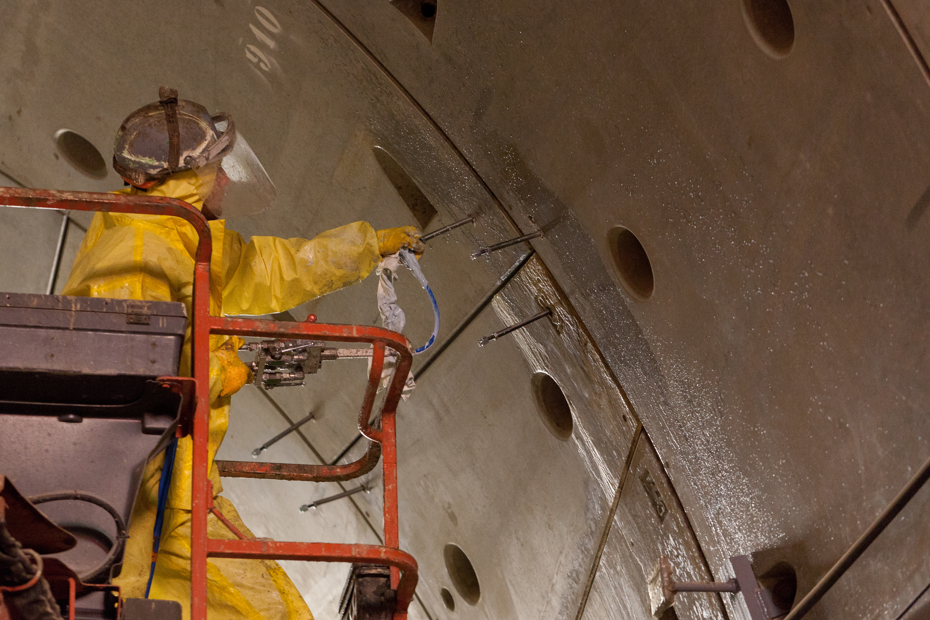
During construction or operation, concrete structures may develop cracks, voids, or areas requiring filling to restore structural continuity and performance in accordance with design requirements. Injection technology allows materials to be introduced into these areas to fill cavities, provide sealing, or establish bonding between material surfaces. For applications requiring structural strengthening, particular attention must be given to load transfer capability, strength after curing, and compatibility with the existing structure.
In practice, crack treatment may aim to achieve sealing, prevent water ingress, or strengthen the structure, depending on the characteristics and severity of the affected area.
Therefore, accurate condition assessment and the selection of materials that meet the relevant technical requirements are essential, particularly where the load-bearing capacity of the structure may be affected.
3. Soil stabilization & Void filling
Heterogeneous ground conditions, highly permeable soil layers, and the presence of underground voids can create significant challenges for tunnelling and underground construction. In some cases, groundwater movement through soil formations may transport fine particles, increasing the risk of localised ground instability.
Through specialised injection technology, materials can be introduced into targeted soil and rock formations or voids to help:
- Reduce permeability within the treatment area.
- Fill cavities, voids, or fractures in the surrounding ground.
- Improve the stability of targeted soil and rock formations.
- Support the management of geotechnical risks during construction.
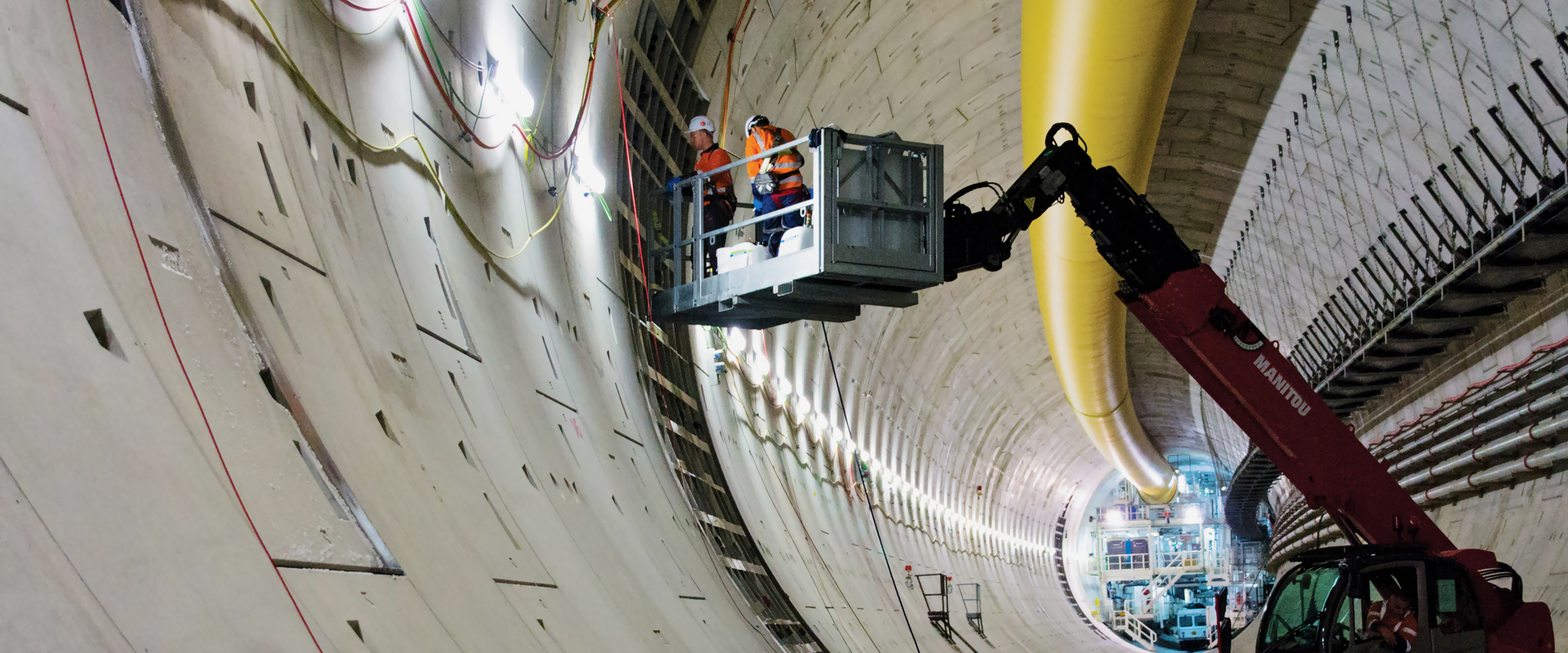
In TBM and NATM tunnelling projects, injection treatment may be considered before, during, or after excavation, depending on geological conditions and the selected technical approach. However, material penetration and the effectiveness of ground improvement depend significantly on permeability, fracture characteristics, groundwater conditions, and the injection method. Therefore, appropriate geotechnical assessment and construction process control are essential to achieving the intended results.
4. Waterstop & Waterproofing systems
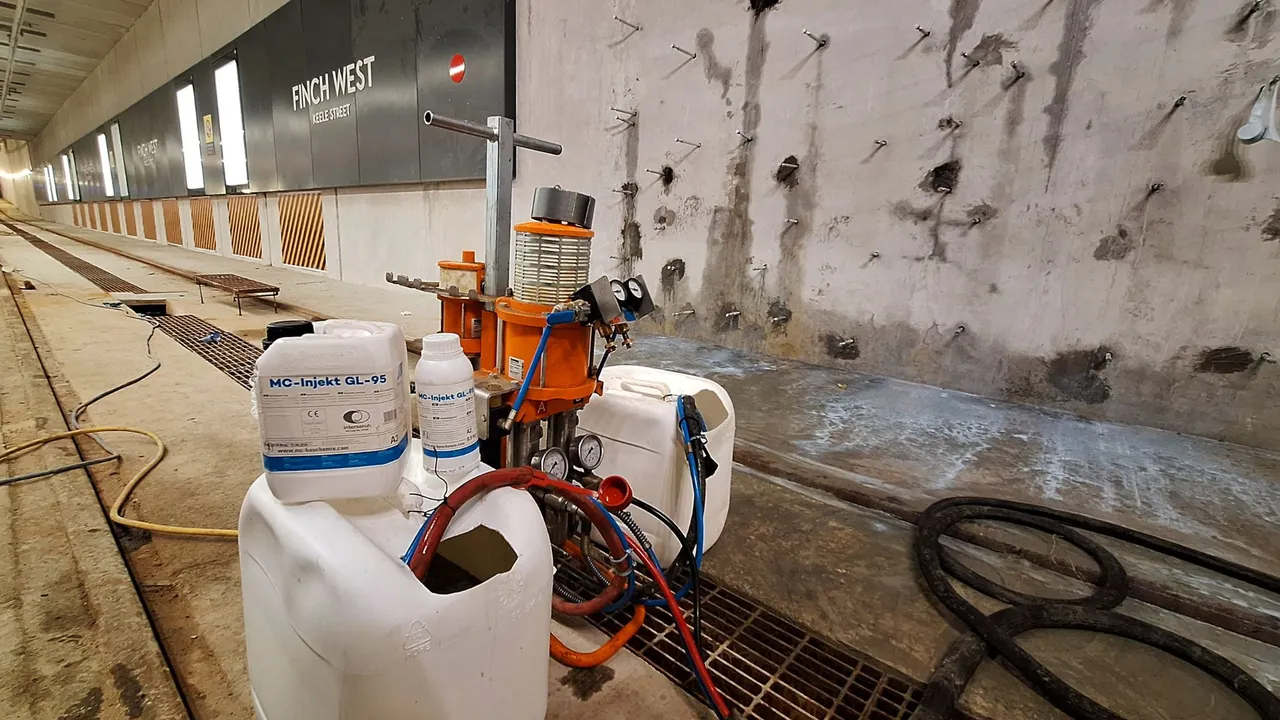
Beyond treating localised leakage points, injection technology can also be used to create sealing zones or waterproof barriers in areas requiring enhanced groundwater control. Depending on the system design, materials may be injected through pre-installed injection hoses or channels, into joints, or into interfaces behind structural elements. Certain gel systems can penetrate narrow gaps, helping form sealing zones that restrict water movement through existing flow paths.
These solutions may be considered for basements, underground structures, tunnel lining joints, and other applications requiring additional waterproofing protection. The long-term performance of the system depends on selecting appropriate materials, defining the treatment area, and ensuring compatibility with groundwater pressure, structural movement, and operational requirements.
Selecting the right Injection solution for project requirements
Every underground construction project presents its own structural characteristics, geological conditions, groundwater challenges, and construction requirements. Therefore, selecting an appropriate injection solution requires a comprehensive approach that combines technical assessment with actual application conditions. Several important factors should be considered from the outset.
- Define the treatment objectives
The first step is to clearly identify whether the technical objective is to stop active water ingress, seal joints, fill voids, strengthen structures, or improve ground conditions. Defining the treatment objective helps determine the appropriate material system and injection method while avoiding the use of materials outside their intended application range.
- Assess existing conditions and application requirements
Factors such as groundwater pressure, leakage flow rate, crack width, geological characteristics, accessibility of injection points, and operational conditions should be appropriately assessed. For complex geotechnical or structural applications, additional testing, detailed investigations, or on-site trials may be necessary.
- Review technical documentation and select the Injection method
Product Technical Data Sheets (TDS), injection equipment specifications, design requirements, and applicable standards provide important references for determining the appropriate solution. In addition to material selection, an injection plan should be developed to control pressure, flow rate, injection sequence, and treatment verification methods.
- Collaborate with Specialist solution providers
Collaboration between contractors, designers, technical teams, and specialist material suppliers helps clarify application requirements, evaluate feasible approaches, and support implementation in line with the project schedule.
An effective injection solution depends not only on material properties but also on the compatibility between chemical technology, application methods, and the specific technical requirements of each project.
MC Underground – Advanced Injection solutions powered by German Technology
MC Underground (MCU) is the specialised tunnelling and mining business unit of MC-Bauchemie, Germany – a globally recognised construction chemicals group with more than 60 years of experience, operations in over 50 countries, and a workforce of more than 3,500 employees worldwide.
Combining global expertise, practical application knowledge, and an integrated solutions approach, MCU is committed to addressing real-world technical challenges and delivering reliable, effective solutions suited to the demanding conditions of underground construction projects worldwide.
Specialised Injection Technology for diverse underground engineering challenges
Through its MC-Montan Injekt and MC-Injekt product systems, MC Underground offers a comprehensive portfolio of injection solutions, with performance characteristics tailored to different application requirements.
- Joint Sealing & Water Control
For applications involving segmental tunnel lining joints, expansion joints, and areas subject to significant anticipated movement, injection materials must provide high flowability at low injection pressures, along with controllable reaction times suited to the specific treatment requirements.
MCU offers specialised systems such as MC-Montan Injekt TR-X and MC-Injekt PowerSeal G, providing sealing solutions tailored to joint characteristics and groundwater conditions.
- Sealing & Structural Filling
Cracks and voids in concrete or shotcrete, cold joints, narrow gaps, and structural interfaces require materials with suitable injectability across different pressure ranges. In addition to reaching the target treatment areas, compatible strength, flexibility, bonding performance, and long-term durability are important considerations.
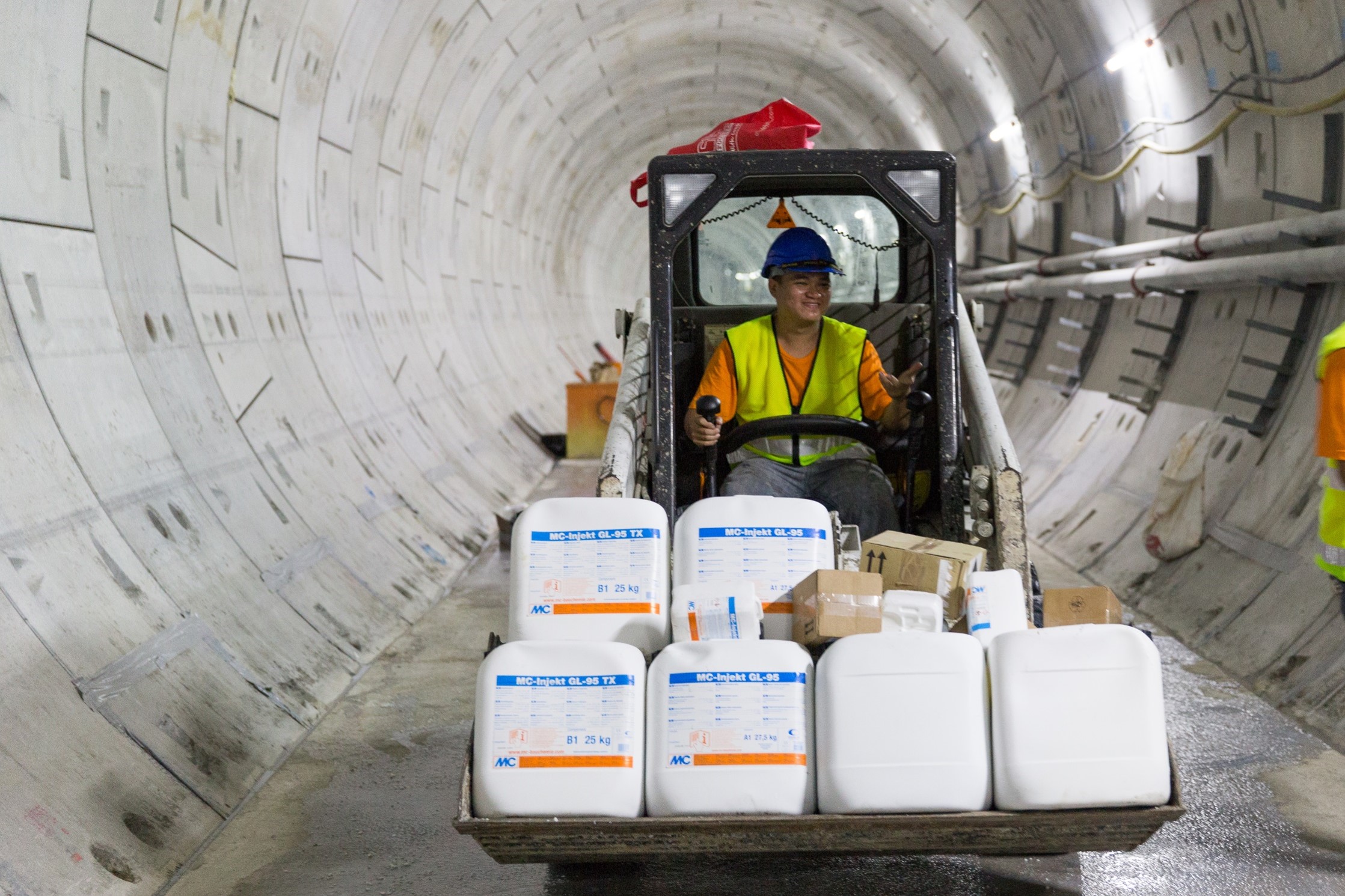
With product systems including MC-Injekt 1264 compact & TF, MC-Injekt 2300 top, MC-Injekt 2300 flow, and MC-Injekt PowerSeal F, MCU provides specialised technological solutions for structural sealing and filling applications.
- Soil Stabilization & Void Filling
For applications involving sealing zones or groundwater cut-off walls, ground consolidation, compensation grouting, and void filling, injection solutions must be selected according to soil and rock characteristics and the intended treatment objectives. Key technical requirements include injectability into soil and rock formations, suitable strength, flexibility, expansion characteristics, and environmental compatibility.
MCU offers specialised systems such as MC-Montan Injekt TF & TR-X, MC-Montan Injekt SF & SC, and MC-Montan Injekt LE-S, addressing diverse requirements for ground stabilization and void treatment in underground construction.
- Specialised Waterstop Systems
During tunnelling operations, sudden high-volume water inflows, uncontrolled groundwater ingress during TBM advance, or the need to establish groundwater cut-off barriers can present particularly demanding technical challenges. For these applications, injection materials may require fast to extremely fast reaction times, medium to high expansion ratios, and resistance to high groundwater pressure, depending on the treatment conditions.
Product systems including MC-Montan Injekt LE-S, MC-Montan Injekt FR / FN / FS, and MC-Injekt PowerSeal G provide specialised options for controlling and stopping water ingress in underground construction.
Technological innovation combined with International application expertise
Technological innovation is a fundamental part of MC Underground’s approach to developing advanced engineering solutions. By combining material research with specialised knowledge of geotechnical engineering, structural performance, and underground construction, MCU aims to develop solutions capable of meeting increasingly complex technical requirements.
Beyond its product portfolio, MCU places strong emphasis on technical knowledge exchange and specialised training in injection technology, supported by practical experience shared across its international expert network. This approach bridges material innovation and real-world construction needs, supporting contractors and technical teams in evaluating and selecting appropriate solutions.
Read Article: International MC Underground Event 2026: Gathering Global Experts in Spain
Conclusion
Injection technology plays an important role in groundwater control, sealing, void filling, and strengthening of underground structures. With its versatility across different geological and structural conditions, injection technology helps address technical challenges arising during both construction and operation.
The effectiveness of injection treatment depends on the integration of accurate condition assessment, specialised material selection, and controlled application methods. Therefore, adopting solutions based on the actual requirements of each project is essential to achieving construction quality and long-term structural durability.
With its foundation in German technology, commitment to material innovation, and international expertise, MC Underground provides specialised injection solutions to support tunnelling and underground construction projects in addressing complex engineering challenges.
In addition, for TBM tunnelling applications, MCU offers a comprehensive range of construction chemical technologies and solutions, including:
- Soil Conditioning & Stabilisation
- Tail Sealants
- Annulus Backfill Grouting Systems
- Main Bearing Lubrication & Sealing Greases
- Admixtures for Precast Tunnel Lining Segments
- Specialised Injection Systems
Explore MC Underground’s Comprehensive TBM Chemical Solutions and Technologies