What determines the performance of TBM foaming agents, and why can the same foaming agent deliver significantly different soil conditioning results under different tunnelling conditions? How can this performance be evaluated and controlled in practical applications?
In practice, the effectiveness of TBM foaming agents depends not only on the volume of foam generated but also on foam quality, its interaction with excavated soil and the suitability of application parameters. These factors are closely interconnected, influencing the ability to improve soil workability and maintain appropriate operating conditions for Earth Pressure Balance Tunnel Boring Machines (EPB TBMs).
Understanding the properties of foaming agents and knowing how to evaluate and control their performance are therefore essential to selecting solutions that meet the technical requirements of individual tunnelling projects.
What Are TBM Foaming Agents? Characteristics and Their Role in EPB TBM
TBM foaming agents are chemical additives used to generate foam for soil conditioning, particularly in Earth Pressure Balance (EPB) TBM tunnelling. These products typically contain surface-active components (surfactants) that enable a foaming solution to form foam when mixed with water and air using specialised equipment.
The application of foaming agents can be understood through three distinct stages:
Foaming Solution: A mixture of foaming agent and water prepared at a specified concentration.
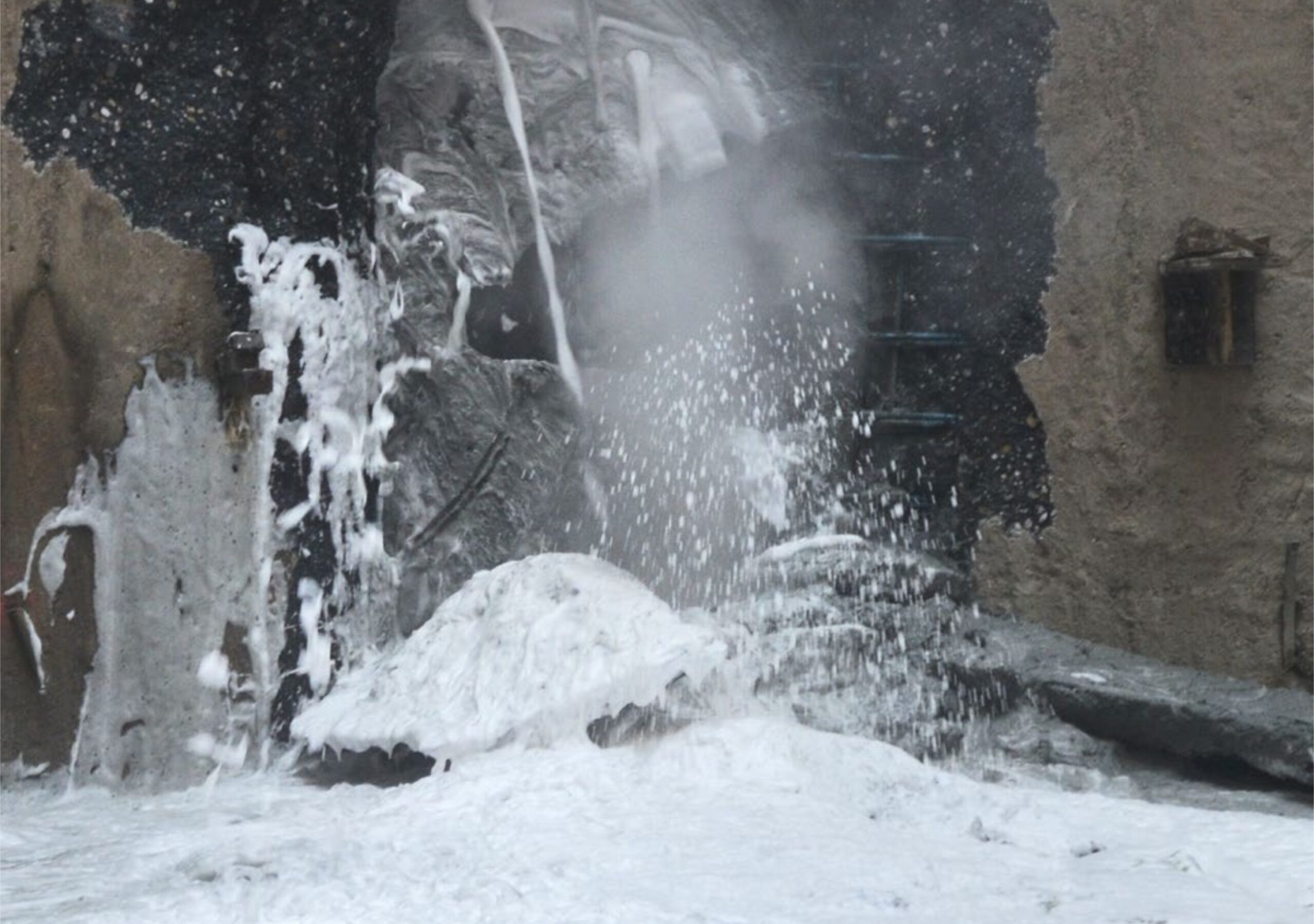
Generated Foam: The foam system formed when the solution is mixed with air, exhibiting specific characteristics in terms of expansion ratio, stability and structure.
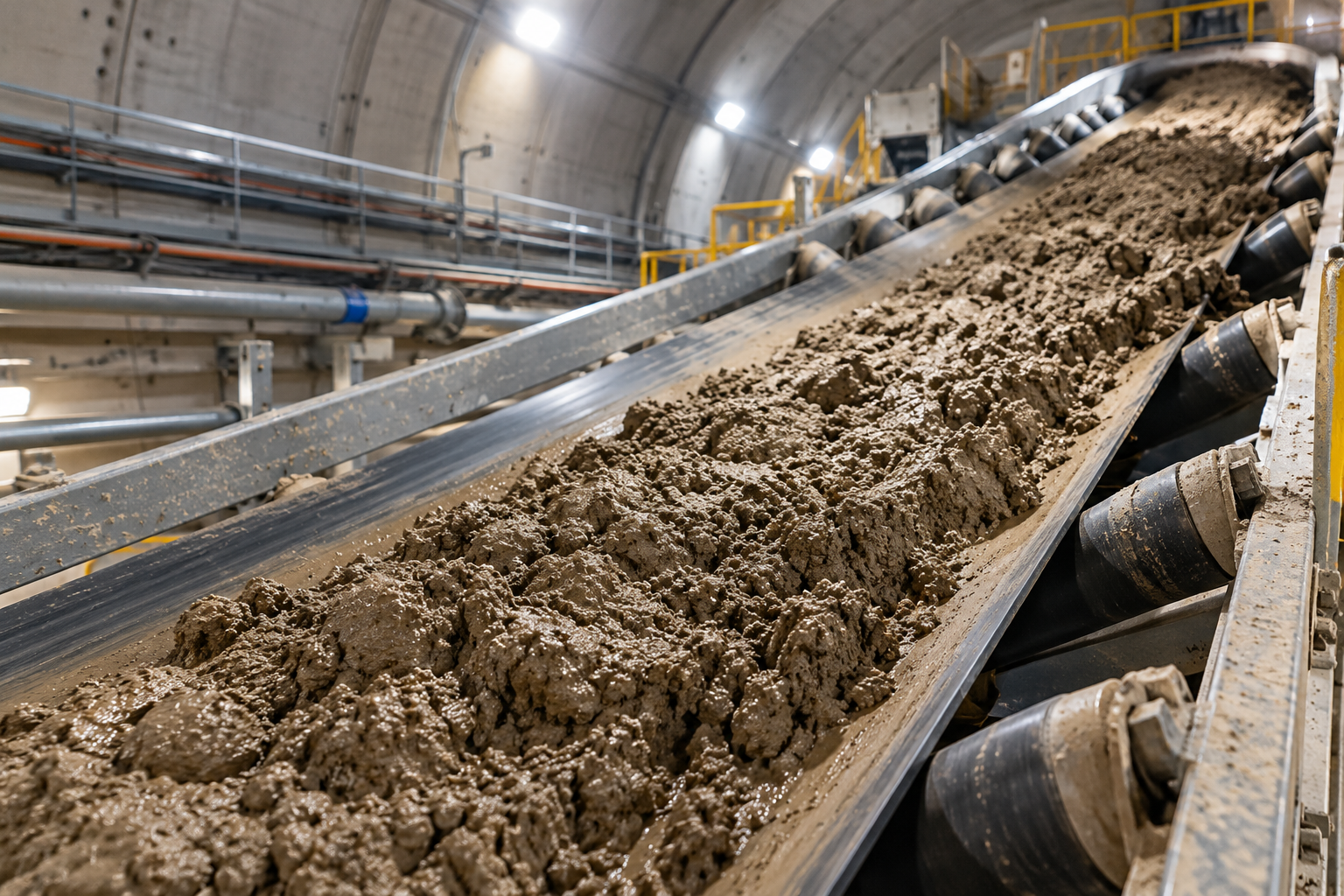
Conditioned Excavated Soil: Excavated material after being mixed with foam, with its properties modified to meet EPB TBM operating requirements.
This distinction is particularly important because the effectiveness of a foaming agent is determined not only by its foam generation capability but also by its compatibility with excavated soil and its ability to improve soil properties. A foam system may perform well under isolated testing conditions but still require further evaluation when interacting with actual excavated material.
In EPB TBM tunnelling, foaming agents are used to improve the workability, deformability and consistency of excavated soil. This facilitates material transport, supports the control of excavation chamber conditions and helps maintain operational performance.
Read more: TBM Soil Conditioning Solutions: Technology, Working Principles and Applications in TBM Tunnelling
What Makes a Foam System Suitable for EPB TBM Tunnelling?
A suitable foam system cannot be evaluated solely by the volume of foam generated. Foam quality also depends on its ability to maintain structural integrity, the size distribution of air bubbles and the extent of its interaction with excavated material.
These characteristics must be considered in relation to geological conditions and actual TBM operating requirements.
Foaming Capacity and Foam Expansion Ratio
Foaming capacity describes the ability of a foaming solution to generate foam when mixed with air under defined conditions.
One of the parameters commonly used to characterise this property is the Foam Expansion Ratio (FER), which represents the ratio of generated foam volume to the initial volume of foaming solution.
FER helps assess the expansion characteristics of the foam system and provides a basis for establishing suitable foam generation parameters.
The performance of a foaming agent can be effectively utilised when FER is selected according to the properties of the excavated soil, required workability and actual EPB TBM operating conditions.
Foam Stability and Structural Retention
Once generated, foam must maintain suitable characteristics for the time required to be transported, injected and mixed with excavated soil.
Foam stability refers to the ability of the foam system to retain its structure against processes such as liquid drainage, bubble coalescence and bubble collapse.
If foam deteriorates too rapidly before interacting effectively with the soil, its conditioning performance may be compromised. Conversely, excessively stable foam is not necessarily suitable for every tunnelling condition, as foam behaviour must be considered throughout the entire process of soil mixing, transportation and excavated material handling.
Therefore, rather than simply aiming for maximum foam stability, the objective should be to select a level of stability appropriate to the intended application.
Bubble Size and Distribution
The structure of a foam system consists of numerous air bubbles with varying sizes and distribution characteristics.
Bubble size, uniformity and the structure of the liquid films surrounding the bubbles can influence how foam is distributed within excavated soil and affect the properties of the conditioned mixture.
A relatively uniform foam structure may facilitate mixing and distribution. However, the final conditioning performance still depends on interactions with the soil.
Consequently, evaluating foam structure and characteristics, in addition to foam generation capacity, provides a more comprehensive technical basis for product selection.
Interaction Between Foam and Excavated Soil
This is one of the most important factors in evaluating the performance of TBM foaming agents.
After injection, foam interacts with excavated material that may vary in particle size distribution, moisture content, plasticity and surface characteristics.
These factors influence foam distribution, mixture consistency and overall soil conditioning performance. For example, loose sandy soils and highly adhesive clay formations may respond differently to the same foam system.
Therefore, foam quality should be assessed alongside its effectiveness in improving excavated soil properties, rather than relying exclusively on tests performed on the foaming solution or foam system in isolation.
Factors Affecting the Performance of TBM Foaming Agents
Even when the same foaming agent is used, application results can vary depending on mixing conditions, material properties and TBM operating parameters.
Identifying these factors helps technical teams understand the reasons behind performance differences and provides a basis for selecting and adjusting suitable soil conditioning solutions.
Mixing Water Composition and Quality
Water is the primary component used to prepare foaming solutions.
Properties such as water hardness, salinity, pH and dissolved ion composition can affect the foaming performance of certain surfactant systems.
The extent of these effects varies depending on the product formulation. Therefore, when evaluating foaming agents, it is important to consider the quality of the water intended for use on site and its compatibility with the selected product, particularly in projects with unusual water supply conditions.
Solution Concentration and Foam Generation Conditions
The concentration of foaming agent in the prepared solution is one of the parameters influencing foam formation and foam characteristics.
In addition, airflow rate, solution flow rate, supply pressure and foam generation equipment design can affect the foam expansion ratio, bubble structure and foam stability.
Increasing foaming agent concentration does not necessarily produce a proportional improvement in performance. In some cases, higher dosages may increase additive consumption without delivering corresponding technical benefits.
Therefore, solution concentration and foam generation conditions should be established based on product characteristics, testing results and specific application requirements.
Soil Characteristics and Foam–Soil Interaction
Excavated soil characteristics directly influence the effectiveness of foam-based soil conditioning.
Factors such as particle size distribution, fines content, moisture content, plasticity, permeability and mineralogical composition can affect how foam interacts with soil.
For sandy soils with low cohesion, conditioning may focus on improving workability and maintaining suitable mixture consistency.
In contrast, for highly adhesive clay soils, particular attention should be given to interactions between foam and soil particle surfaces, as well as the effectiveness of the foam in modifying material consistency. In certain cases, additional specialised anti-clay adhesion additives may be required.
For this reason, testing with representative soil samples is an important part of evaluating TBM foaming agents.
Pressure Conditions, Mixing Processes and Residence Time
After generation, foam is transported through pipelines, injected into excavated soil and subjected to pressure conditions and mixing forces within the EPB TBM system.
These conditions can alter the foam structure compared with its initial state.
The time between foam generation and its interaction with excavated soil is another factor that should be considered.
A suitable foam system must meet application requirements under actual operating conditions rather than simply demonstrating favourable results in static laboratory tests.
FER, FIR and Foam Concentration: Understanding Their Relationship in Foam Control
In TBM foaming agent applications, three commonly monitored parameters are FER, FIR and foaming solution concentration.
Although these parameters describe different aspects of the process, they are closely related and should be evaluated together to control additive application effectively.
What Does FER Indicate About Foam Properties?
FER (Foam Expansion Ratio) is the ratio of generated foam volume to the volume of foaming solution used to produce that foam.
For example, if 1 litre of foaming solution generates 10 litres of foam, the corresponding FER is 10.
This parameter indicates the degree of foam expansion but does not fully describe foam stability, bubble size or the effectiveness of foam–soil interaction. Therefore, FER should be evaluated in combination with other foam characteristics.
How Does FIR Affect the Amount of Foam Injected into Soil?
FIR (Foam Injection Ratio) represents the ratio of injected foam volume to excavated soil volume, according to the calculation convention adopted for the project. For example, if a test procedure uses 100 litres of foam for 1 m³ of excavated soil, the corresponding FIR is 10%, provided that the volumes are determined using the same calculation convention.
FIR is an important parameter for controlling the amount of foam introduced into excavated material. However, the appropriate foam dosage must be determined based on soil characteristics, conditioning objectives and testing results.
Both excessive and insufficient foam injection can prevent the conditioned soil mixture from achieving the desired consistency.
How Does Foam Concentration Influence Foam Generation?
Foam Concentration (Cf) represents the proportion of foaming agent in the prepared foaming solution.
This parameter influences additive consumption and may affect foam generation capacity, bubble structure and foam stability. It is important to distinguish foam concentration from the ratio of foam injected into excavated soil.
These are separate parameters corresponding to different stages of the soil conditioning process.
Why Should FER, FIR and Foam Concentration Be Evaluated Together?
FER describes the degree of foam expansion, FIR indicates the amount of foam injected into the soil, and solution concentration represents the proportion of foaming agent in the initial mixture. These three parameters are interrelated when determining the required volumes of foaming solution and the amount of additive consumed. For example, for the same required foam volume, foam systems with different FER values will require different quantities of foaming solution. If the solution concentration also changes, foaming agent consumption will vary accordingly.
This demonstrates that optimising foam application requires simultaneous consideration of foam quality, the volume of foam introduced into the soil and the quantity of additive used. Quantitative calculations must follow the appropriate volume conventions, measurement conditions and calculation methods established for each project.
Evaluating TBM Foaming Agent Performance: From Laboratory Testing to Practical Application
Selecting a suitable foaming agent requires a technically grounded evaluation process, covering both product characteristics and performance when interacting with excavated soil. Testing plays an important role in determining application suitability and supporting the selection of appropriate parameters before implementation on site.
Laboratory Evaluation of Foam Characteristics
The initial evaluation stage typically focuses on foam generation capacity and the fundamental characteristics of the foam system. Parameters that may be assessed include Foam Expansion Ratio (FER), foam stability, liquid drainage and changes in foam properties over time.
These tests help identify differences between foaming solution formulations, concentrations and foam generation conditions. However, testing the foam system in isolation only provides a partial assessment of product characteristics. To evaluate actual application performance, further investigation of foam interaction with excavated soil is required.
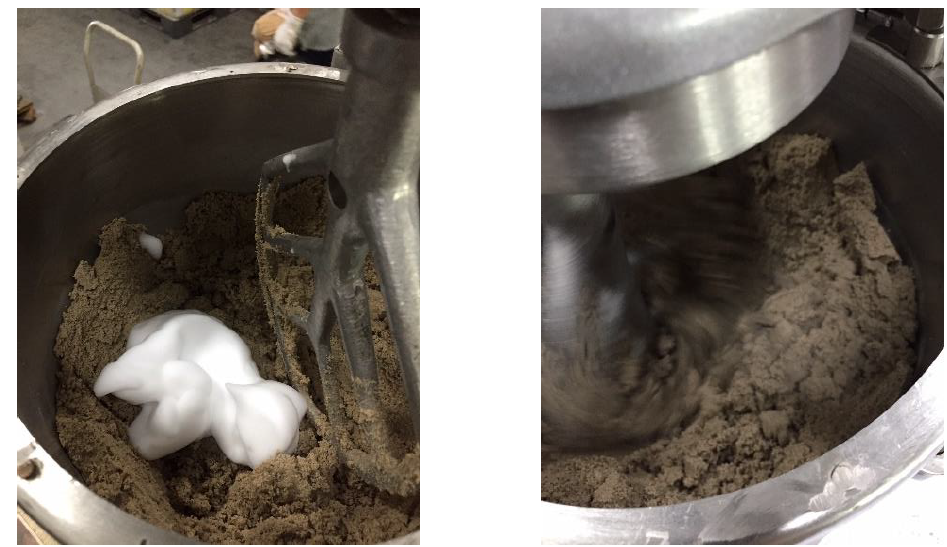
Testing Improvements in Excavated Soil Workability
After mixing with foam, conditioned soil can be evaluated using test methods appropriate to the material type and conditioning objectives. For example, the Slump Test may be used to assess certain aspects of workability for soil mixtures suitable for this testing method.
Other properties may also be considered, including deformability, homogeneity, segregation behaviour and relevant physical or mechanical characteristics, depending on technical requirements.
The objective of this stage is to determine the extent to which excavated soil properties improve under different foaming agent formulations and application parameters.
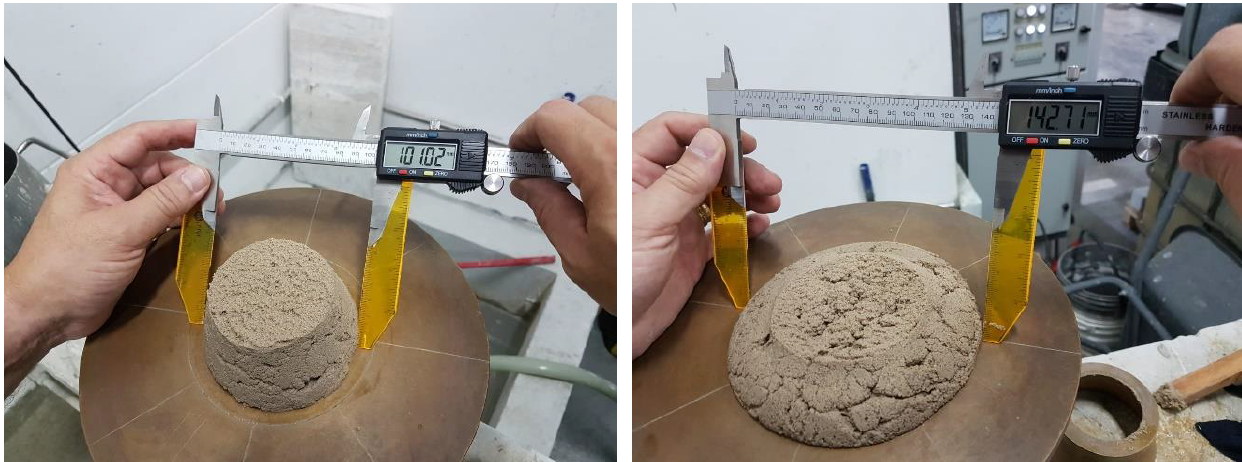
Evaluating Material Transportability and Related Properties
In addition to workability, effective soil conditioning is associated with the ability to transport excavated material and meet the technical requirements of the EPB TBM system.
Depending on geological conditions, testing may focus on deformability, flow behaviour, permeability, water retention or other relevant performance indicators.
Combining results from multiple tests provides a more comprehensive basis for evaluation and reduces reliance on any single parameter.
Correlating Laboratory Results with Actual TBM Operating Conditions
Laboratory testing provides an important foundation for screening conditioning solutions and selecting initial application parameters.
During on-site implementation, foaming agent performance should continue to be evaluated through the actual response of excavated soil, spoil characteristics and relevant TBM operating parameters.
Changes in geological formations, groundwater conditions or operating modes may require adjustments to application parameters.
Therefore, foaming agent evaluation should be regarded as a continuous technical process connecting testing, application, monitoring and adjustment, helping maintain suitable conditioning performance throughout the different stages of tunnel construction.
Common Issues When Using TBM Foaming Agents and Recommended Checks
During practical application, foam quality and soil conditioning performance may vary due to factors related to materials, equipment and operating conditions.
Early identification of abnormal performance and systematic checks can help technical teams determine appropriate adjustments.
| Observed Issue | Factors to Check |
|---|---|
| Inconsistent foam generation | Solution concentration, mixing water quality, airflow rate and foam generation system condition. |
| Rapid foam deterioration | Solution characteristics, foam stability, residence time and mixing conditions. |
| Conditioned soil does not achieve the required workability | FER, FIR, soil characteristics, moisture content and foam distribution. |
| Conditioning performance varies along the tunnel alignment | Geological variations, groundwater conditions and TBM operating parameters. |
| Additive consumption increases without a corresponding improvement in performance | Relationship between solution concentration, FER, FIR and conditioning objectives. |
Note: The factors listed above are intended as initial troubleshooting guidance and should not be regarded as definitive or exclusive causes of each issue.
In practice, a single operational symptom may result from several interacting factors. Therefore, any adjustments should be based on technical data, on-site assessments and project-specific operating procedures.
Effective use of TBM foaming agents depends not only on selecting the right product but also on the ability to monitor, control and adjust the conditioning solution according to actual tunnelling conditions.
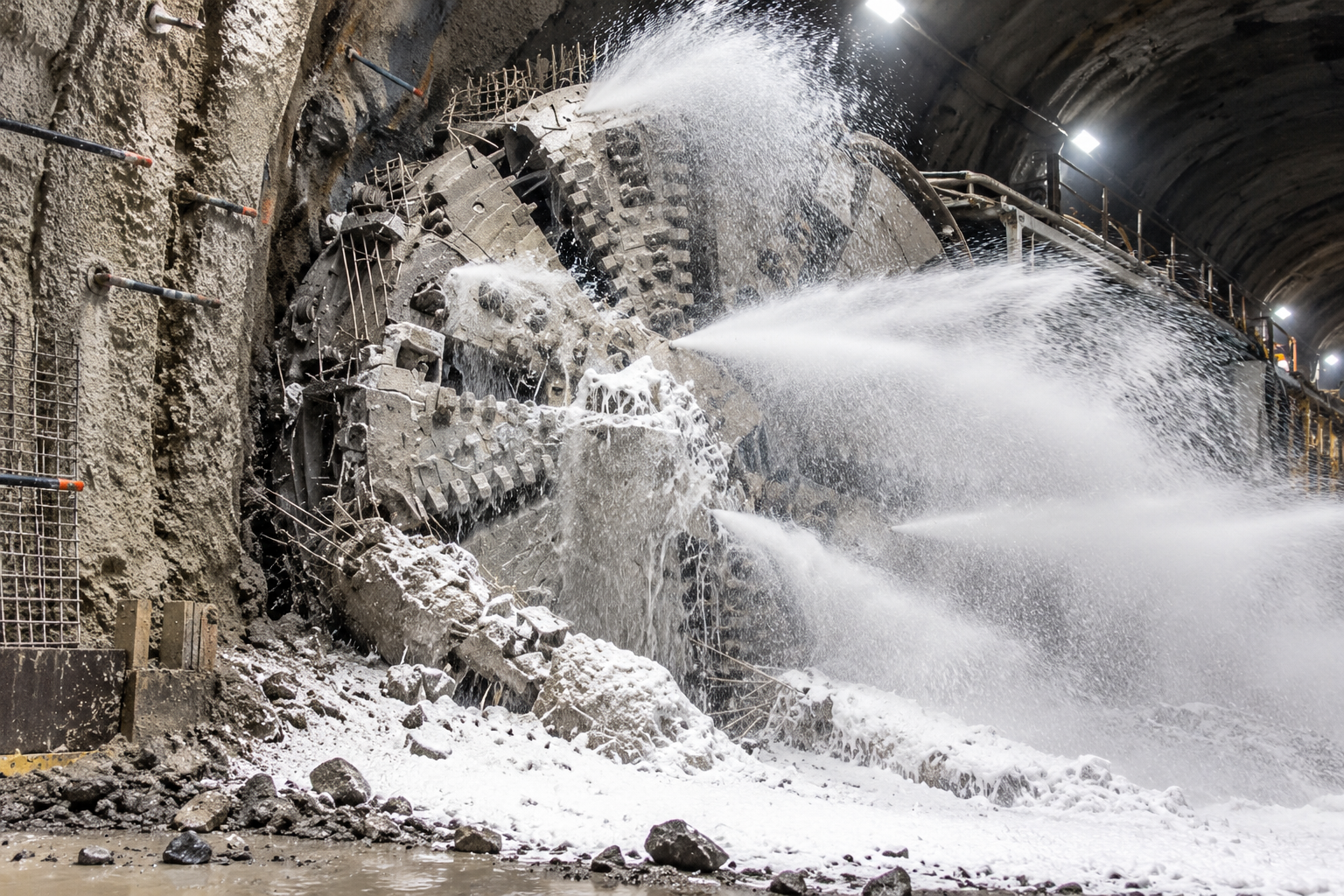
MC Underground – Specialised Foaming Agents and Soil Conditioning Technologies for TBM Tunnelling
Drawing on the technical expertise of MC-Bauchemie Group (Germany), MC Underground (MCU) provides specialised chemical solutions and technologies for tunnelling and underground construction, including soil conditioning technologies for EPB TBM applications.
Recognising the differences in geological conditions and operational requirements, MCU has developed a diverse portfolio of soil conditioning solutions, including foaming agents, polymers and specialised additives designed to address the technical needs of different tunnelling projects.
Specialised Soil Conditioning Solutions for Different Geological Conditions
Rather than applying a single solution to every tunnelling condition, MCU develops product ranges with distinct characteristics and application areas to address specific technical challenges encountered during excavation.
MC-RheoClay® – Solutions for Clay and Sandy Soil Formations
The MC-RheoClay® product range includes foaming agents and anti-clay adhesion additives (Anti-Clay Agents) designed to improve excavated soil consistency and support the control of adhesion-related issues during EPB TBM tunnelling.
MC-RheoSand® – Combining Foaming Agents and Specialised Polymers
Developed with foaming solutions, structuring polymers and water-binding polymers, MC-RheoSand® provides soil conditioning options for applications requiring improved soil structure and water retention characteristics.
MC-SolidFoam® – Solutions for Fault Zones, Gravel, Cobbles and Hard Rock
For challenging geological conditions, such as fault zones or EPB TBM excavation through gravel, cobbles and hard rock formations, MC-SolidFoam® is one of MCU’s specialised solutions developed to meet specific application requirements.
MC-ArtSoil® and MC-StartupFoam® – Specialised Solutions for the TBM Start-Up Phase
The start-up phase is an important stage in bringing a TBM into operation.
With MC-ArtSoil® and MC-StartupFoam®, MCU provides specialised solutions designed to address the technical requirements of this phase, supporting TBM start-up and the establishment of suitable operating conditions.
AFCS – Foam Control Technology Supporting Optimised Soil Conditioning
In addition to chemical solutions, AFCS (Assisted Foam Control System) is one of the notable technologies within MC Underground’s innovation portfolio.
During EPB TBM tunnelling, controlling foam generation parameters and the amount of foam applied plays an important role in soil conditioning performance.
AFCS is introduced as a technology solution that supports foam generation control, aiming to improve the management and adjustment of foam application under actual TBM operating conditions.
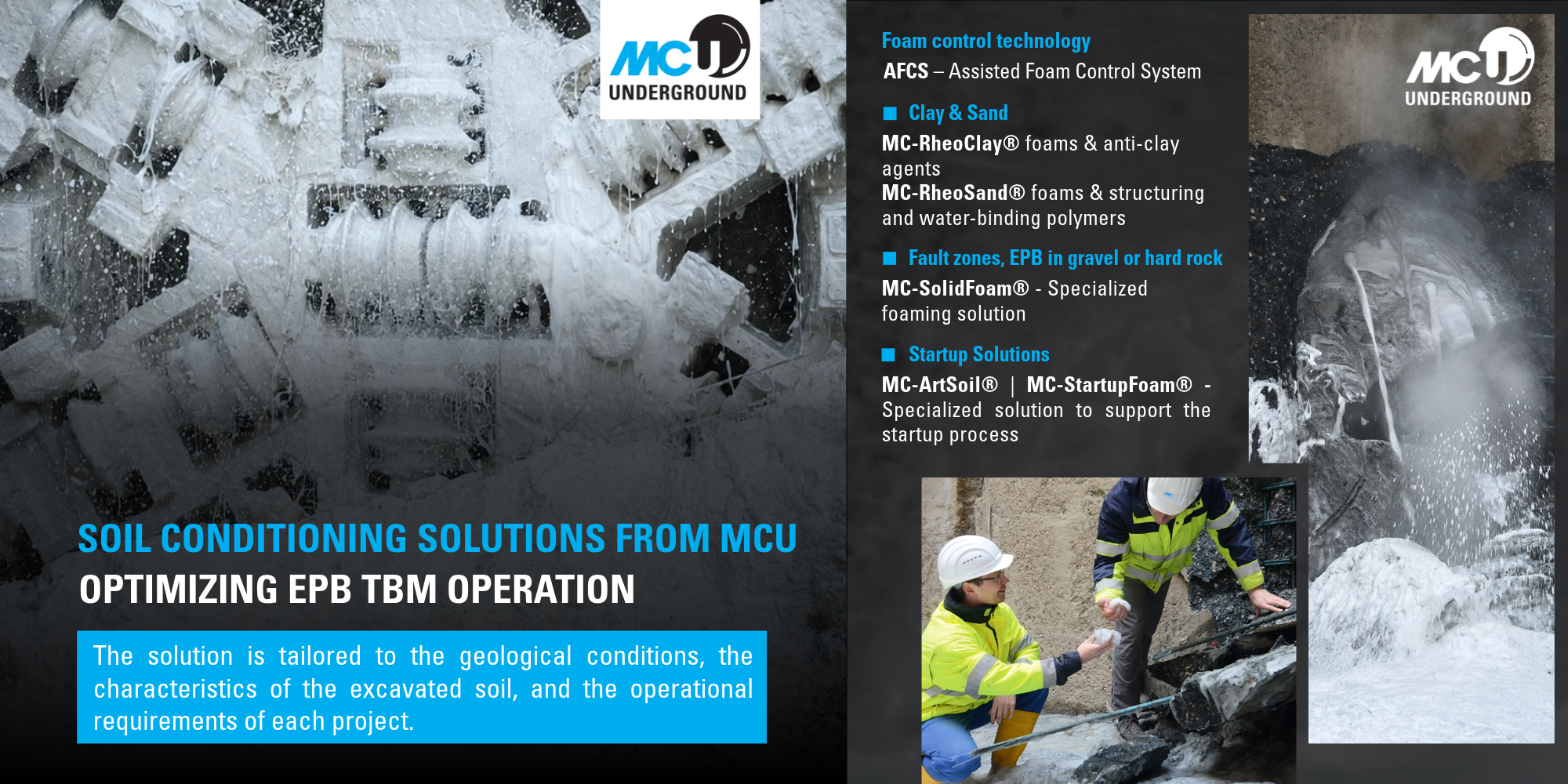
Innovation Focused on Resource Optimisation and Environmental Responsibility
Alongside technical performance, MC Underground places emphasis on developing solutions that support efficient resource utilisation and address environmental requirements in underground construction.
Some of MCU’s notable initiatives and development directions include:
- Reducing Water Demand with MC-RheoClay®: An innovative approach designed to support the optimisation of water consumption during soil conditioning.
- Plant-Based Foams: Reflecting MCU’s development direction towards foaming products formulated using plant-derived raw materials.
- Solutions Supporting Excavated Material Management: MCU also introduces approaches related to the potential for Unrestricted Muck Disposal. However, the feasibility of unrestricted disposal must be evaluated according to excavated material characteristics, the additives used and the applicable regulations for each project.
MC Underground – Specialised Solutions, Advanced Technology and Innovation
The integration of innovation, application technology and specialised chemical solutions is a defining feature of MCU’s approach to developing solutions for tunnelling and underground construction.
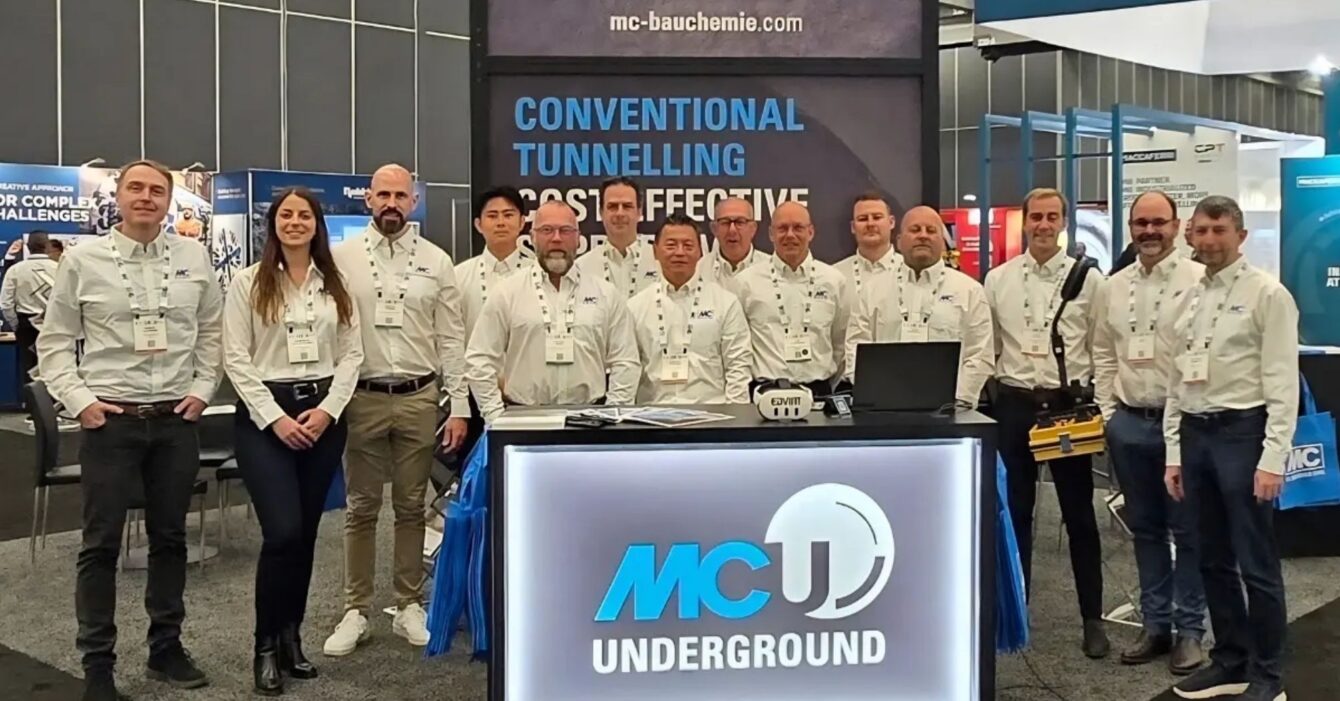
Strong MC Underground team performance at WTC 2026 in Montréal, Canada